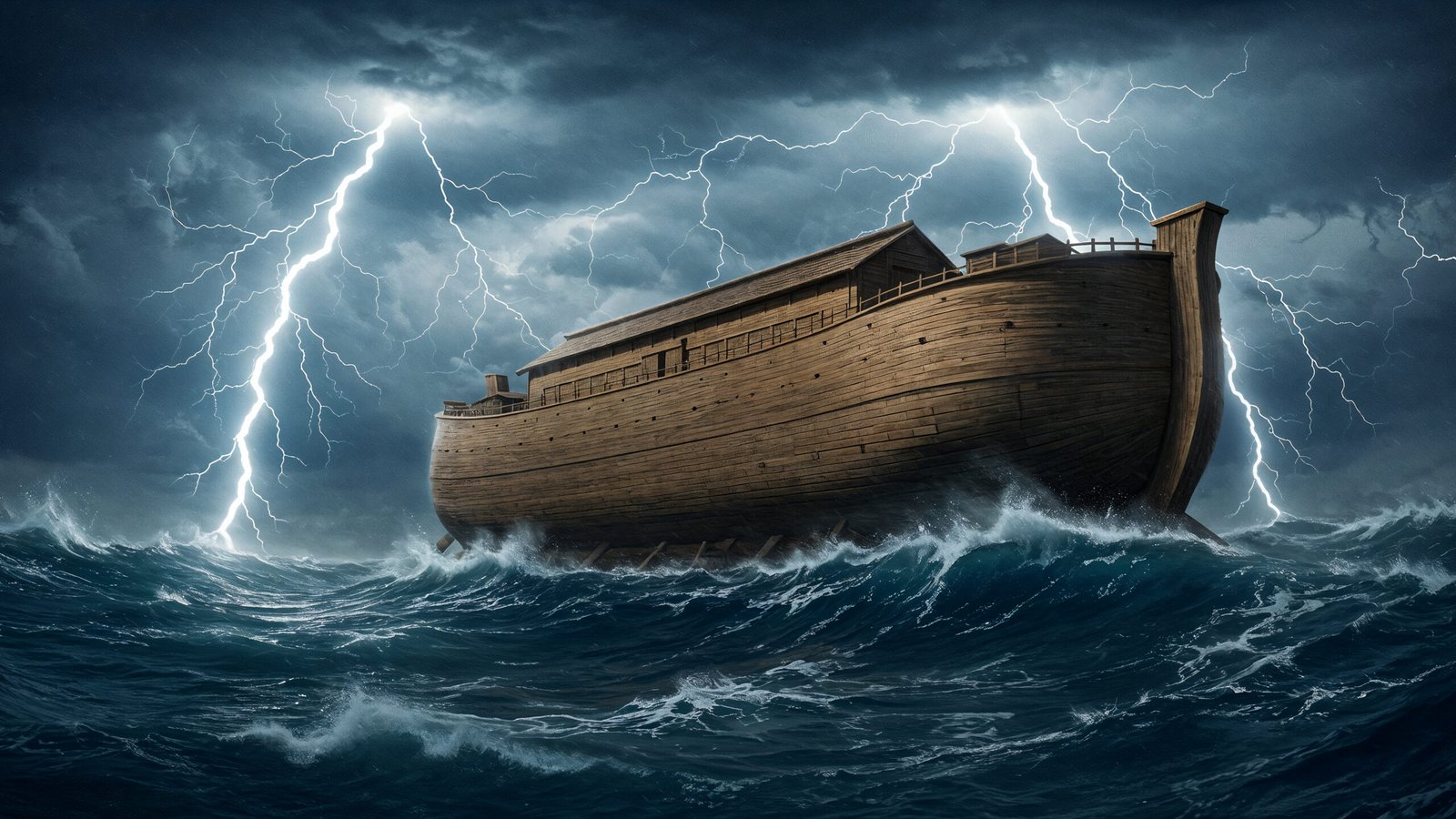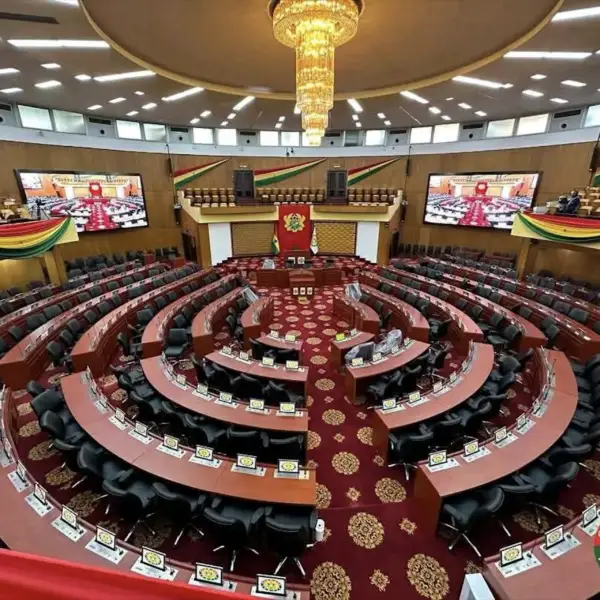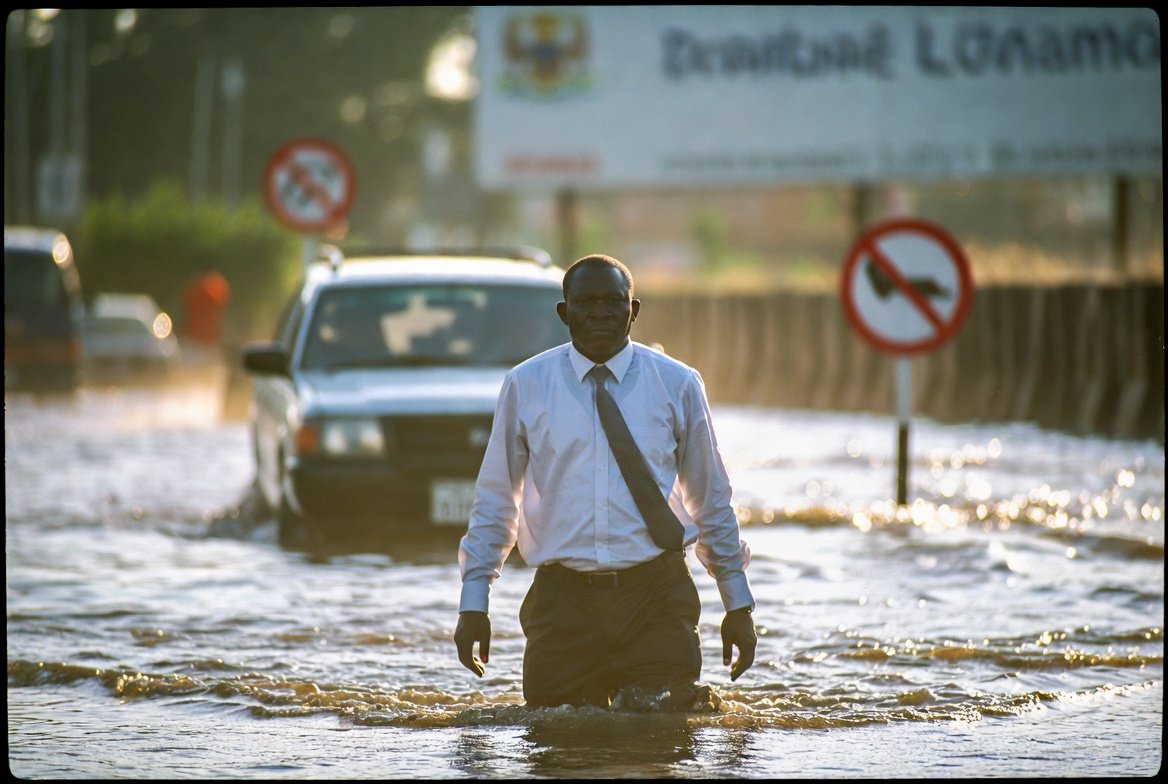
This is an Accra flooding satire that seeks to highlight the repetitive habits that contribute to the flooding and the lack of solution from leadership.
Confession Time
It is rather difficult to say, genuinely difficult because she is still laughing, Ghana is still laughing. She keeps laughing her heart out, and her eyes are wide open with something that looks almost like a surprise happiness. And yet, here we are on the morning of another flood, with parts of Accra, the capital of the nation, submerged. Now, we are trying to say again, what we have been circling around for decades without action.
We grew up not loving her, but she doesn’t know that. Or at least, we loved her the way you love a place when your parents are the lens through which you see it. We loved her when we learned to walk on her soil, when we sang her anthem with a pride we had not yet earned the right to question—“God Bless Our Homeland,” which, in hindsight, sounds much like a very long list of unanswered prayers.
When adulthood arrived, we saw her clearly for what she was to us. Not because she had changed, but because we changed. She was always like this. We just did not know yet how to listen to what she was telling us. And on Palm Sunday in March 2026, she reminded us again that: when it rains in Accra, everything floats except our shame.
Now, let’s explore the intricacies of the problem in this Accra flooding satire.
Accra Flooding: The Annual Ritual
Urban flooding has been a documented crisis in Accra since the 1930s, with significant flood disasters recorded in 1955, 1960, 1963, 1973, 1986, 1991, 1995, and 1999. Taylor & Francis Online Then in 2015, the flood that combined with a petrol station explosion and claimed over 152 lives in a single afternoon. Then in 2025, four dead, three thousand displaced. Again on March 29, 2026, parts of the city gets flooded again for the umpteenth time. As a result of that, we are witnessing humans walking on water, and cars diving like whales.
Ghana has been saying the same thing for several decades, and we have been nodding and looking elsewhere for all that time.
Do we love her like we say we do? Perhaps we loved her most when our mothers were the chosen conduit for her generational love—when someone else was absorbing the weight of what it means to be here. But when adulthood came and removed that buffer, we felt her thorns pierce our fragile dark skins.
We felt what it actually costs to live in a country that floods on schedule. A country that has mastered the art of performing surprise at something that arrives every single year, on the same roads, with the same water. Meanwhile the same people stand in it filming for social media and the same officials will form the same committees and taskforces. Finally, the government of the day will pretend to seek solutions only to sleep again when the sirens of wake up call gets louder.
It is perennial when it rains, and in Accra, it always responds with floods.
Who Is Actually Flooding Accra
Let us say the uncomfortable part before we get to the politicians, because the politicians are coming, and they deserve their own section, and they will get it, but first, us.
Accra generates between 2,000 and 2,800 tonnes of solid waste every single day. A few hours of heavy rain can submerge roads, stall traffic and flood homes, often because gutters are choked with the same sachets and bottles discarded at places like Circle. Ghana News Agency
Here comes the fact: The gutter outside the house did not choke itself. The sachet water bag did not leap from the hand of its own accord into the drain at the junction. Additionally, the shop owner who sweeps the refuse from the shop floor directly into the gutter opening at six in the morning did not arrive at this habit by accident. We built this system together. One sachet, one bottle, one bag of rubbish at a time, over ninety years, in the same city we photograph from the highest angle possible and caption: “Beautiful Accra.”
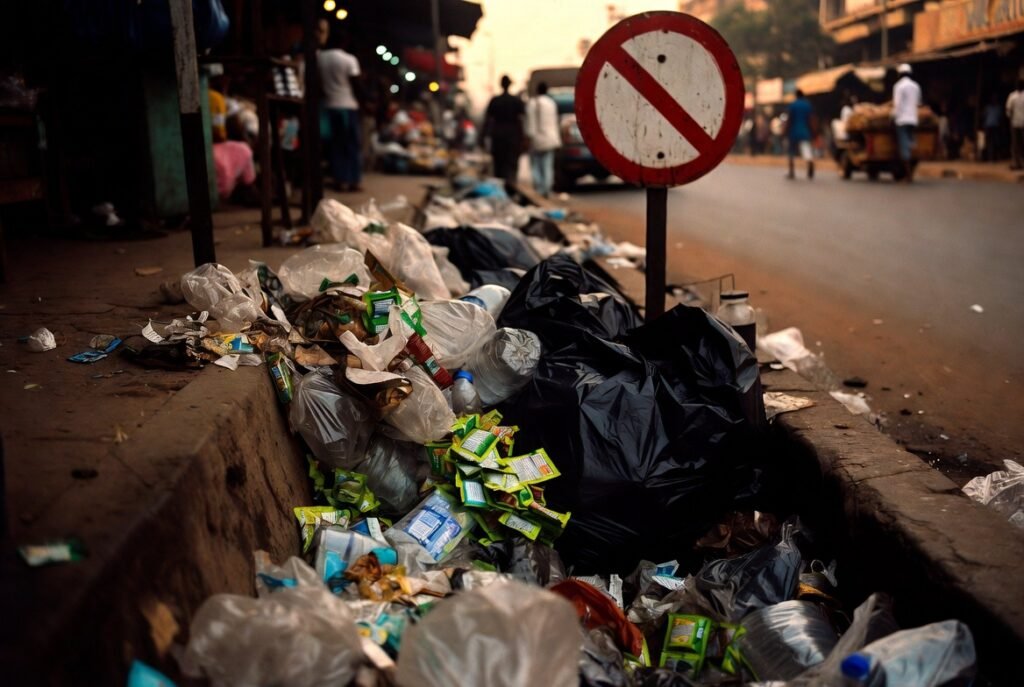
Urban sanitation in Ghana is not a mystery. The laws exist, the agencies exist, the signage also exists. What appears persistently absent is collective discipline and sustained enforcement. Ghana News Agency. The No Dumping Here sign stands at the exact location of the largest heap of refuse. This is not irony. This is policy operating at its natural Ghanaian frequency. We announce half-baked solutions with full media frenzy, which are immediately ignored by everyone including the people who announced it.
We are the selfish ones who expect altruism inside everyone else—the person who demands clean streets and throws the bottle from the window of the moving car. The person who will post angry commentary about the flooding from the same phone whose charging cable packaging sits in the gutter three metres from their front door.
Our country has thorns piercing through her ribs, and these thorns were made by us. Proper made in Ghana.
It’s been proven in this Accra flooding satire that, we simply don’t care about our own lives. We prefer being breathless to tasting salt.
This lands like Accra floods in your inbox every Tuesday and Friday.
Subscribe free — no noise, just the satire
The Architecture of Our Own Disaster
Growing up here made us feel the thorns of Ghana in a particular way. Not violently. But slowly, the way you notice a crack in the ceiling. Not when it appears but when it finally lets in the rain. Accra is a valley. When you build on swamps and fill in dried riverbeds and sell plots on floodplains and wonder why the water returns every April, you are not experiencing bad luck, you are experiencing cause and effect.
Only 33.4 percent of Ghanaian households have their solid waste properly collected. Ghana News Agency The remaining two-thirds manage their waste through arrangements that can be summarised as: the nearest gutter, the nearest open space, or the nearest person who is not looking. Multiply this across a city of four million people across a rainy season that runs from March to July, and you do not have a flooding problem. You have a flooding certainty, signed, sealed and delivered.
The boulder we keep pushing uphill is made partly of our own discarded sachets. This is not comfortable to say. But comfort has not been keeping the water out of anyone’s living room, so we might as well say it.
Has Ghana ever thought about why so many of her own choose to escape to walk further distances toward the foreign lands where manna falls from above? Does she know we search for where our future does not float away on a Tuesday morning? She held our hands. She tried. But she is also silent and let the gutter fill and the drain collapse. The master plan gathers dust in a ministry drawer while the rainy season approached on its unchanged schedule.
So we hear and dream about life abroad and pick up up our Ghana must gos. Some of us leave, and carry with us with them the list that clears customs without being declared. This time, they carry the specific memory of standing in water. A memory that should not exist in a capital city in the year of our Lord 2026.
The War That Was Declared
In May 2025, President Mahama declared war on floods, describing flooding as a pressing national emergency that has taken lives, displaced families, and repeatedly brought economic activity to a standstill. GBC Ghana
“Too many families have lost loved ones, homes have been washed away, and businesses have suffered unbearable losses,” he said. “This is unacceptable, and it must stop. We are declaring war on floods.”
Ghana has now officially declared war on floods. The rain has not yet responded to the declaration but keeps showing up anyway. It rained on March 29, 2026, and guess what, parts of Accra flooded again.
This is not the first war. Neither is it the second, and won’t be the last. Every government that has entered office since independence has, at some point, surprisingly discovered that Accra floods. And they responded with the only tools consistently available: a press conference and pretence. The manifesto that houses the most dormant solutions is the one promising to end the flooding. It was delivered with engineering diagrams, task force formations, and the specific phrase “never again.” That is before the minister responsible is reshuffled and the diagrams are filed somewhere the water cannot reach, while we continue to live a country where it may be easier to find gold than to find dustbins.
A National Taskforce on Flood Control will be formed, tasked with addressing the growing issue of flooding across the country, with its primary focus on identifying and clearing blocked drainage systems in flood-prone areas. GBC Ghana
There is something deeply Ghanaian about a taskforce whose task has yet to start but has the intention of never completing the task assigned to them. These are the people who give Accra flooding, a satiric heartbeat.
The Promise And The Engineering Solutions
Before Mahama was president, when he was still running, he had something to say about the NPP’s flood record. He noted that the Greater Accra Resilient Integrated Development Programme consumed $200 million, with its impact on flood prevention yet to be felt, while parliament was recalled to approve an additional $150 million for the same programme. Graphic Online
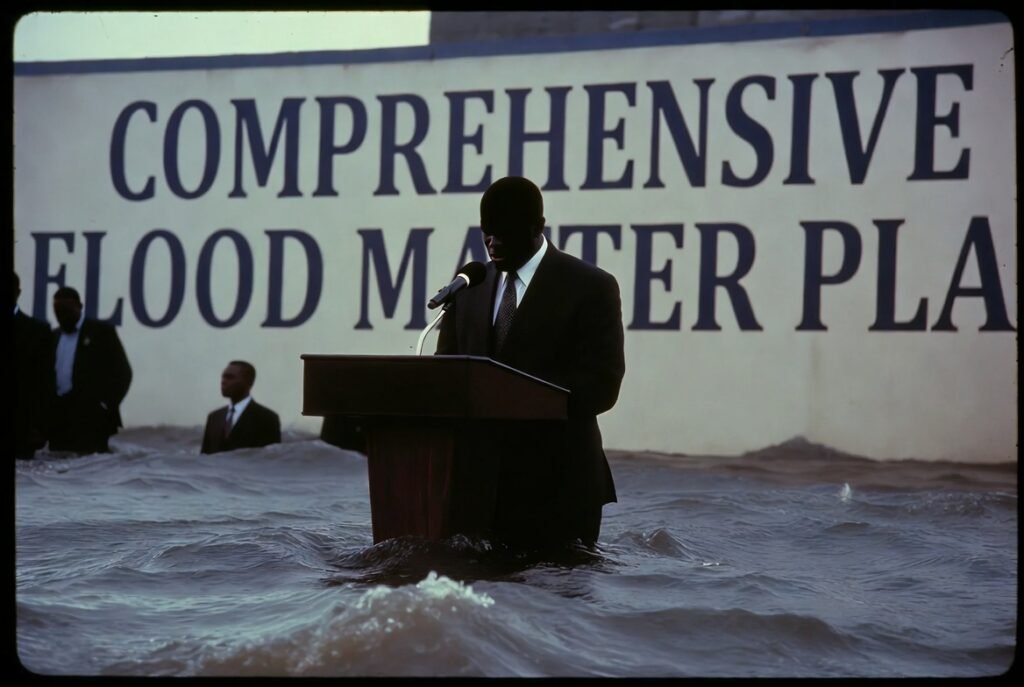
This is the correct observation about the previous government. It is also, if we are being honest about it, a preview of what becomes the current government. The great drainage promise, the engineering solution, the comprehensive flood master plan announced with the full weight of a government that had just won on the strength of the promise. They arrived with the same energy that all such promises arrive with in Ghana. Loud. Official. Timestamped. And then: the rains will come back like they always do, and Accra will flood again.
Ultimately, it is confirmed that, it is way too easy to make promises than to fulfil them by these same politicians. Like they say, “talk is cheap.”
The Tweet of The Century
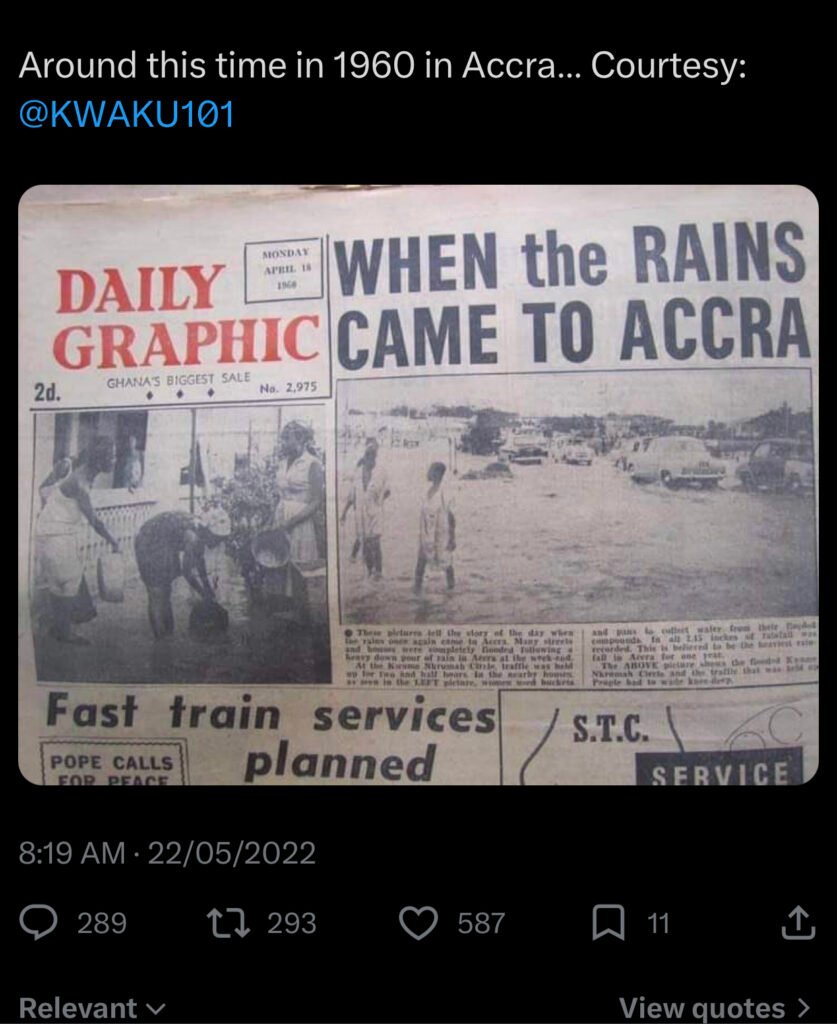
I chanced on a post on Twitter(now X) about four years ago with this as a caption: “around this time in 1960 in Accra” by a renowned politician. The photograph was of flooding headline on Daily Graphic’s front page. Just when criticisms were being directed at our leaders for not acting, he made that tweet. How absurd it actually was to caption the same floods that were devastating lives and properties. It was almost like a seal of endorsement from someone being paid to stay motivated enough to solve problems.
These are floods that carry not away our shame, but rather our loved ones. That is the part nobody puts in the caption.
This year Accra flooding satire is organising a bus trip to the next masterplan launch, expected soon.
What Happiness Looks Like From A Distance
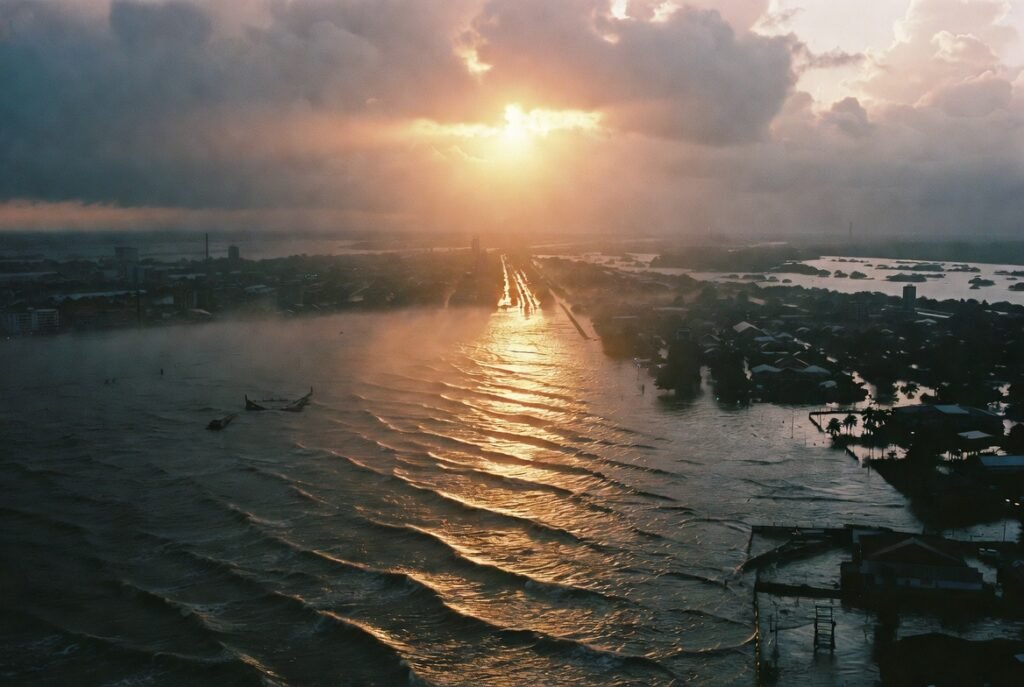
We do not hate her. That is the honest part. Hate would be simpler than this. What we feel is something harder to name. It is the specific mix of pretence and negligence that comes from hurting someone you care about with the same choice, on the same schedule, and receive the same outcome. Afterwards, we look up at the sky with genuine bewilderment and ask why it keeps raining.
Those among us who left and now inhabit the foreign lands. Those who send money home, who ask every year if the flooding got better, read the news on a phone in Atlanta or London and see the same photographs. They would cry rivers upon hearing what they already know. That it continues to flood. That someone declares war and a taskforce is formed. Then a master plan is commissioned. Ultimately, it floods again without fail.
We actually do not love Ghana the way we should. But that is only if we ever truly loved her the way she deserved. Not through our mothers’ eyes, not through the anthem we sang before we understood the words. But rather clear-eyed, adult, full of the specific knowledge of what Ghana has been and what she could be, and the gap between the two that fills with water every single year..
One must imagine Accra dry. Not because the drainage has been fixed, not because the taskforce demolished the illegal structures. Also, not because the gutters are finally clean. But because the rain stopped, just for today, and in the temporary dry, we saw what the city could look like if we decided to deserve it.
The sun is out for now, let’s make hay.
The Brewed Satire
Disclaimer: Exaggerating for a satiric effect
Share via
Tags
Get every Brewed Satire free in your inbox → Subscribe on Substack