

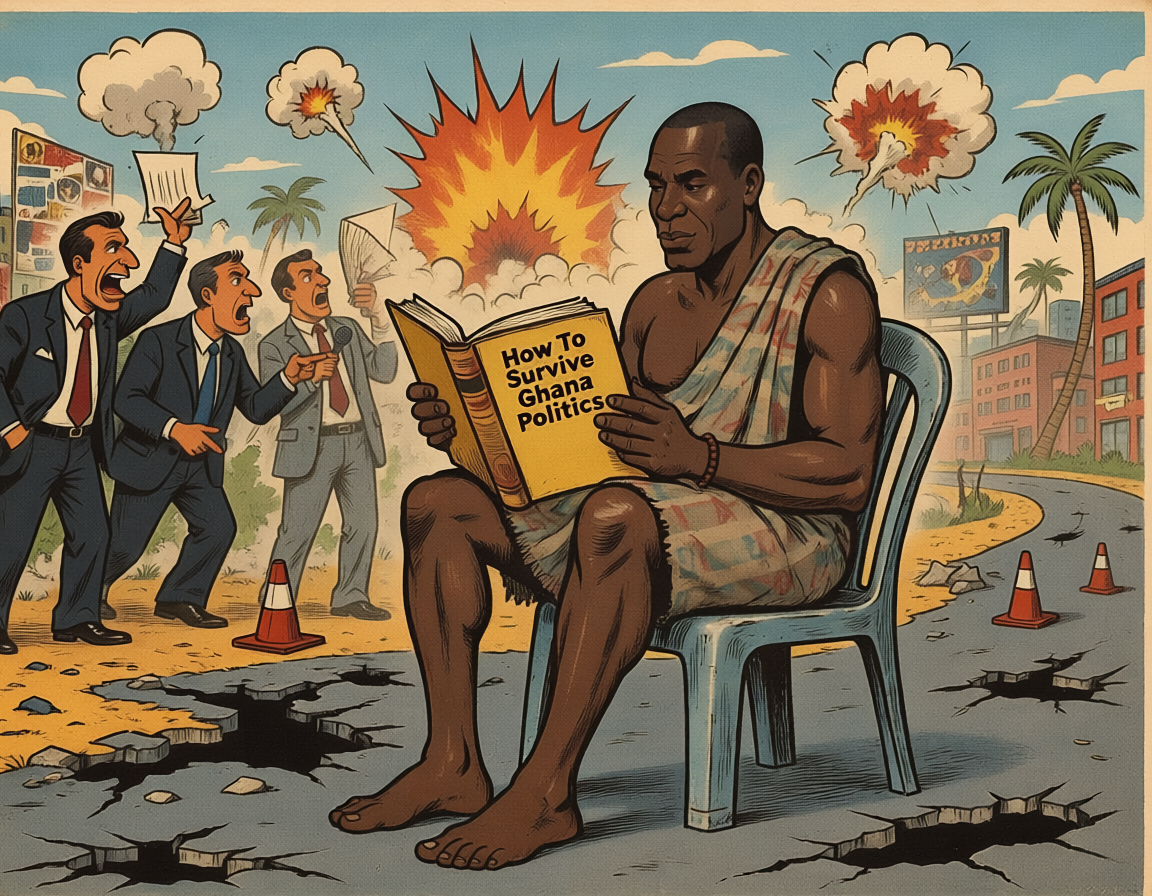
Disclaimer: This is a Ghana politics satire. Any resemblance to actual speeches, press conferences, parliamentary sessions, or exaggerations is entirely and depressingly expected.
Ghana Politics
Somewhere in Ghana — We warmly congratulate you for having made the courageous, arguably most irresponsible decision of your life to follow Ghana politics.
What motivated you? Perhaps you saw a headline somewhere, or your uncle won’t stop arguing on the family WhatsApp group or you simply made the mistake of turning on the television at 7pm, and a minister was mid-sentence explaining why something that was definitely his fault was actually the previous government’s fault.
Either way, welcome to the drama of Ghana’s politics, where very little will make sense to you until you finally give up. We have prepared this guide, and some cold beers (check your fridge for yours) to quench your booze-thirst as we embark on this infinite journey via the wheels of Ghana politics satire.
A Coping Mechanism
Ghana politics satire is not merely a genre of entertainment. It rather is a coping mechanism, a cultural and social pressure valve. The one thing that keeps educated, frustrated Ghanaians from weeping openly on public transport. We laugh because we must. We mock because the alternative: earnest, sustained outrage is exhausting when the object of your outrage is re-elected every four years with an average of over 70% voter turnout to mess up your life in 4K graphic resolution once again.
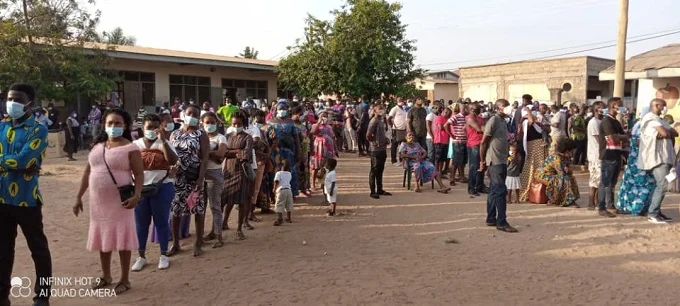
That previous percentage is not a joke. According to the international election body, IFES, Ghana’s average voter participation sits cooly at 72.6% in presidential elections, a statistic that is so remarkable for a country that spends the four years threatening to stay home on election day. However, in 2024, they finally did a little of that, with a 60.9% appearance, and banished the Elephant in the room to the already depleted Atiwa forest. The free-falling cedi had a lot to do with that as Ghanaians were for once, truly fed up with a government in power.
One very self-important political commentator stated that, “The only way to prove to these politicians is that we decide to not show up for elections, but rather turn that day into a national fufu eating day.“ Not many statements are wiser than that.
This guide will not fix Ghana politics. Nothing fixes Ghana politics. However, what it will do is equip you to understand it, survive it, and occasionally laugh at it without losing the remaining threads of your sanity.
We are a nation that complains loudly about its politicians and then queues patiently at 2am to elect them again. This is either democracy functioning beautifully or the world’s most committed shared delusion. Possibly both.
This lands in your inbox every Tuesday and Friday.
Subscribe free — no noise, just the satire
The Two-Party Paradox: NDC vs NPP, A Spot-The-Difference Guide
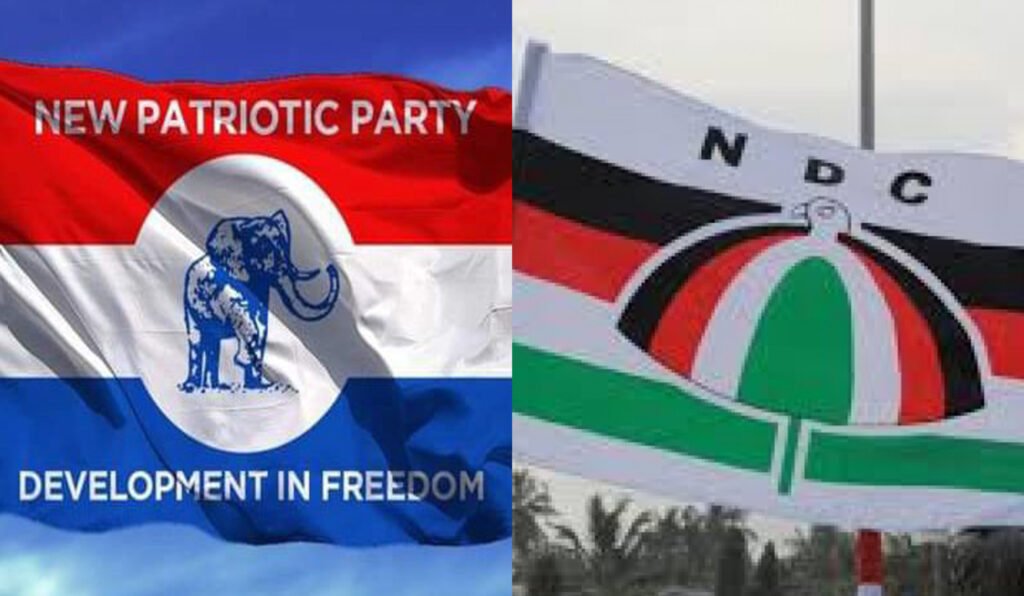
Ghana operates on an unofficial two-party system. The National Democratic Congress and the New Patriotic Party have governed Ghana in alternating cycles since 1992. Every four or eight years, one of them takes over the seat of government from the other. And every four or eight years, the same things happen.
They describe the economy as broken, committees are formed, then a legacy project is announced. Huge sums of monies are then paid to a politician’s business associate to undertake a contract that does not exist in any official government books. Additionally, the exchange rate moves in a direction nobody fantasizes about while the new government explains patiently that what we are witnessing is not mismanagement— it is the natural consequence of inheriting a broken economy from the previous administration.
Ghana’s economy has been “inherited broken” approximately every election cycle since independence. The economy itself, at this point, should qualify for some form of hazard pay.
The ideological differences between NDC and NPP are fiercely debated by their respective supporters and largely invisible to external observers. NDC supporters will tell you NPP is a party that pretends to be elites while the NPP supporters will tell you NDC is a party of incompetents. Both will present this as a meaningful distinction. Both parties will, upon assuming power, form a litany of committees, award contracts, and express concern about the exchange rate during the previous government’s regime.
The true difference between NDC and NPP is not philosophical but rather theological. NDC supporters believe Ghana would be fixed if NPP would simply stop destroying it. NPP supporters believe Ghana would be fixed if NDC would simply stop destroying it. This is the entire debate. It has been ongoing since 1992. No resolution is ever expected.
The Ghanaian Political Dictionary: What They Say vs What They Mean
No survival guide to Ghana politics would be complete without a translation service. Ghanaian political language is a rich, evolving dialect in which ordinary words carry extraordinary alternative meanings. We present the essential glossary.
“I am a servant of the people“— Delivered with one hand on the chest and eyes slightly moist with manufactured humility. Those words are typically said at inaugurations and never again.
This translates to: the people are about to serve me their taxes, their road budgets, and their hospital funds while I am very ready to receive, and devour them with every sinew of my being.
“By the grace of God”— God is the most overworked unpaid consultant in Ghanaian public life. No policy announcement, contract award, or parliamentary walkout is complete without divine endorsement. The frequency with which a politician invokes God correlates inversely with the transparency of what follows. In Ghana politics, this is known among political observers as the “Pretend to Let God Do the Work Through You Theorem.”
In the mean time, let’s not forget the erstwhile finance minister who quoted more verses from the Bible than economic vocabularies and theories in his Annual Budget readings on the floor of Ghana’s parliament.
Throwing God’s name in the faces of the masses is an old African political trick that plays on the psyche of the people who are overly religious than what the doctor even ordered.
“We have set up a committee to investigate“— The committee is Ghana’s most productive institution, in the sense that it reliably produces nothing except per diem allowances and interim reports promising comprehensive findings soon. The average committee lifecycle: Week 1, inauguration with great fanfare. Month 2, request for additional funding. Month 6, interim report. Year 2, quiet dissolution. The matter under investigation: still outstanding, unbothered, and thriving like never before.
The Ghanaian Political Dictionary: What They Say vs What They Mean: Part 2
“This is a legacy project”— A legacy project is an overpriced, ‘underplanned’ or ‘overplanned’ structure that will be abandoned at 25% completion when the next government arrives and decides the previous government’s legacy project is not their legacy at all.
These legacy projects come in many different varieties such as the ‘will-not-be-completed’ National Cathedral which turned out to be a $58 million puddle, the $200 million unfinished Saglemi Housing Project, and the agenda 111 which eventually morphed into a 666 project for Ghanaians.
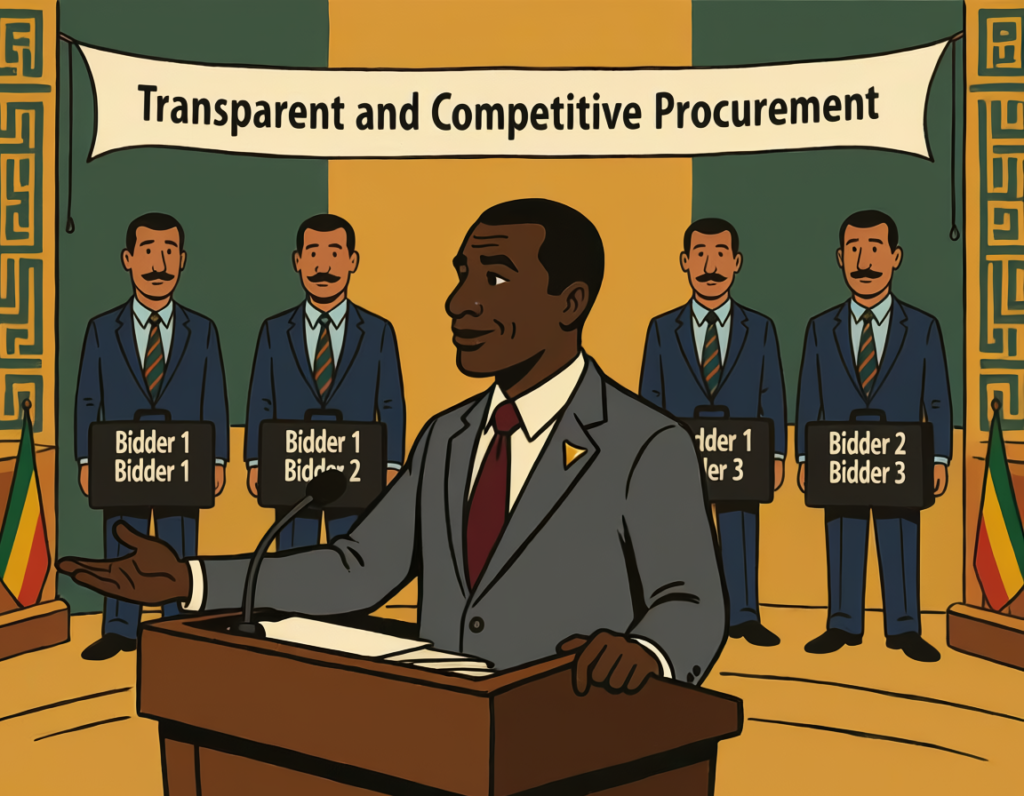
“The procurement process was transparent and competitive” — Said immediately after a contract worth $200 million is awarded to a company whose registered address is someone’s aunty’s house in Tema. Competitive bidding, the Ghanaian version: three companies submit bids, two belong to the minister’s cousin, the third is disqualified for incomplete documentation (missing a comma). The contract is then eventually awarded the minister’s cousin, champagne poured. Transparency achieved.
“I will account for every pesewa” — This is the magnum opus of Ghanaian political vocabulary. This is delivered at the beginning of every tenure with the energy of a man who absolutely will not be accounting for anything.
Additionally, assets will be declared upon assumption of public office: a modest house valued in 1997, a fleet of V8 Land Cruisers described as gifts from well-wishers, and a new mansion in East Legon built by the family over time.
The Election Season Survival Guide: Every Four Years, Ghana Goes Slightly Mad
Election season in Ghana is a unique anthropological phenomenon. It transforms otherwise rational citizens into fierce tribal warriors defending parties that have disappointed them repeatedly, on the entirely reasonable grounds that the other party would have disappointed them worse.
The season begins approximately 18 months before voting day, when manifestos are launched at elaborate ceremonies that nobody reads. The promises contained in these manifestos are creative works of speculative fiction. One hundred factories, free this, subsidised that, and a digitised version of something that was already working fine before it was digitised into a dysfunctional version.
By the six-month mark, the promises have reached supernatural proportions. Roads will be fixed, jobs will materialise, the cedi will strengthen. And somewhere in the campaign calendar, a candidate will promise something so ambitious that economists wince and supporters cheer. The supporters will vote anyway.
The Election Day Fever
Voting day itself is Ghana’s most orderly yet chaotic national event. Queues form before dawn. Voters are patient, both organised and chaotic, and deadly serious about the act of choosing between two options that will, in broadly similar ways, disappoint them. International observers regularly commend Ghana’s elections as a model for the continent. The international observers mostly leave before the results are disputed by capturing ballot boxes with “macho men” , and before both political parties declare themselves winners even before the Electoral Commission of Ghana finds its lost mic.
The post-election season follows a predictable script, where the losing party disputes the results then files a petition at the Supreme Court of Ghana. The Supreme Court pronounces judgement after several months of litigation. The losing party disappointed by the outcome, expresses concern about the ruling and urges their supporters to never give up. After a few rounds of futile remonstrations, a unity statement is issued, then everybody goes home. Meanwhile, the winning party forms a government and begins explaining why the economy they inherited is so intentionally broken.
Inside Ghana’s Parliament: Where Drama Is The Only Bipartisan Achievement
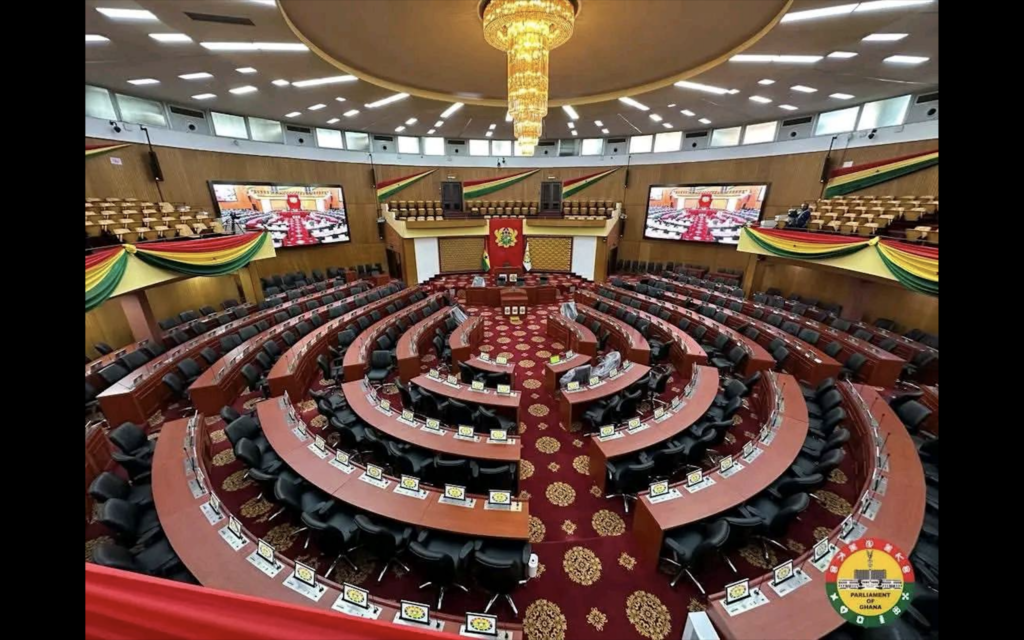
If you have been feeling that Ghanaian politics lacks entertainment, you have not been watching parliament.
Ghana’s Parliament is a building in which grown adults with law degrees and constituency responsibilities regularly walk out of chambers in protest, snatch microphones from each other, invoke Standing Orders with the urgency of people reading from sacred texts, and occasionally fall asleep in full public view during debates on matters affecting 35 million people. Ghana’s parliament is officially a melting-pot for every genre of drama, the Netflix we never thought we had.
The parliamentary walkout is perhaps Ghana’s most refined political art form. It requires no advance notice, no coherent justification, and no clear outcome. One simply rises, announces something appropriately dramatic about the dignity of this house, and departs as the television cameras capture the moments. Furthermore, the opposing parties issue polarizing statements to the general public to defend their respective actions. Finally, everybody returns for the next sitting day as if nothing happened.
What makes Ghanaian parliamentary drama particularly remarkable is its bipartisan quality. Both NDC and NPP MPs have perfected the walkout, the disruption, the theatrical invocation of parliamentary procedure, and the sleeping through of budget debates. In a parliament so divided on policy, it is genuinely moving to see such unity in performance.
Budget Day: The One Day Every Year We Pretend Numbers Will Save Us
Budget Day is Ghana’s most anticipated annual ritual, sitting somewhere between a national sporting event and a theatrical production that everyone watches and nobody fully believes.
The Finance Minister rises. The nation leans forward. For approximately four hours, Ghana suspends its usual cynicism and listens with the focused attention of a people who genuinely want to believe that this year, the numbers will work, tax exemptions will be made, and revenue will increase. Equally, the deficit will narrow, the cedi will also stabilise but somewhere in the middle distance, the IMF will nod approvingly.
By the following morning, the analysis begins. Economists who stayed up all night with the document emerge to explain what the numbers actually mean, which is usually different from what the minister said they mean, which is usually different from what happens over the following twelve months.
Budget Day is not really about the budget, it is about the collective Ghanaian act of hope. We come together once a year to believe, briefly, that a well-formatted document with enough decimal points can resolve structural problems that have been accumulating since independence. It is touching, really. It is also, as a Ghana politics satire tradition, one of our most reliable annual sources of material.
The Prophet-Politician Alliance: A Mutually Beneficial Arrangement
No guide to Ghanaian political life is complete without acknowledging the unique spiritual infrastructure that supports it.
Ghana has more churches per square kilometre than most countries have streets. It also has more prophecies per election cycle than most countries has ever had candidates. The intersection of these two facts produces one of the most distinctive features of Ghana politics: the prophetic endorsement.
Every election season, prophets receive divine intelligence about the outcome of the vote. This intelligence is specific, confident, and frequently wrong. When it is wrong, a correction is issued. The angelic message, it turns out, was delivered in a language the prophet does not speak. The angel was unclear but the vision was metaphorical. God, it seems, communicates with Ghanaian prophets in ways that are subject to significant interpretive flexibility.
The politicians, for their part, welcome the endorsements enthusiastically during campaigns and quietly distance themselves from the prophets when the prophecies do not materialise. Both parties understand the arrangement. It is, in its way, one of the more honest relationships in Ghanaian public life.
The Verdict: We Keep Showing Up, And That’s Either Patriotism or Stockholm Syndrome
Here is the thing about Ghana politics that outsiders miss when they encounter our satire and mistake it for despair.
We mock because we are paying attention. The person who laughs at a broken system is not the person who has given up on it, they are the persons who refuse to pretend it isn’t broken. Ghana’s tradition of political satire, from the barbershop debates to the Twitter threads to the articles published on sites like this one, is evidence of a citizenry that is relentlessly, stubbornly, sometimes furiously engaged.
The average 72.6% voter turnout is not a contradiction of our cynicism. It is its companion. We know exactly what we are choosing between and we show up anyway, because the alternative silence, withdrawal, the quiet acceptance that things cannot change is not in our cultural vocabulary.
Ghanaian politics is exhausting, maddening, occasionally hilarious, and entirely ours. The more power swaps between the two parties, the more things stay the same. Their committees will keep meeting anyway, their legacy projects will keep stalling as usual, and our economy will keep being inherited broken by whoever inherits it next.
What’s more, the prophets will also keep receiving divine updates, and the manifesto promises will keep escalating until someone, in a future election cycle, promises to personally fix good old gravity, which is not even a problem in the first place.
We will keep watching, keep laughing and keep showing up at 2am to queue up on election day because this is our Ghana. And as any student of Ghana politics satire knows, the story is never over. There is always another season, there is always another reason.
The Brewed Satire
Disclaimer: Exaggerated for satirical effect. Any similarity to actual parliamentary proceedings is a matter of public record.
Share via
Tags
Get every Brewed Satire free in your inbox → Subscribe on Substack
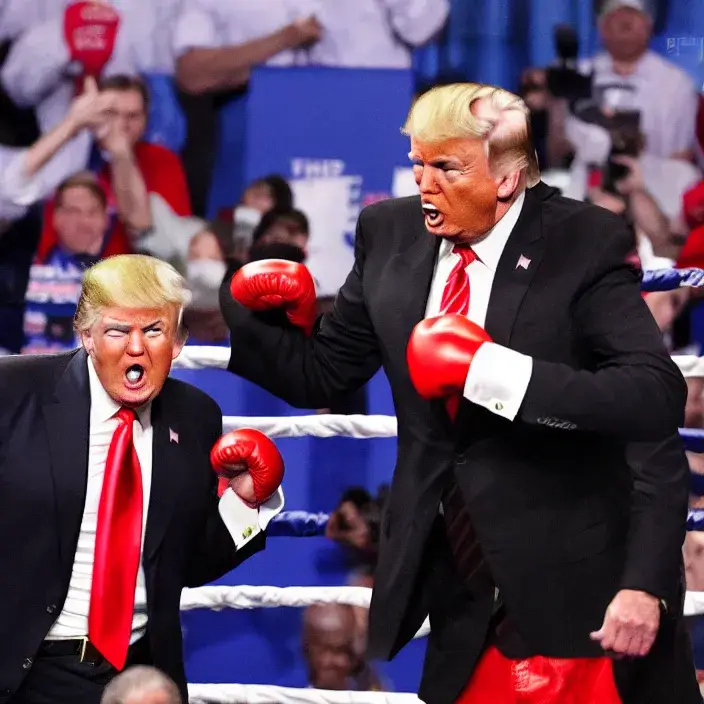









This is truly “the world’s most committed shared delusion “