A Ghana diaspora satire on traveling abroad, and the expectations that come with it.
The Conversation
I had a brief conversation with a friend of mine in this Ghana diaspora satire, who is actually more of a brother than a friend. The gentleman migrated to the US a few years ago to seek greener pastures.
As we all know, the evidence to support that leaving the borders of Ghana to especially Europe and America could transform one’s life is boundless in every Ghanaian community. Remember the friend who travelled outside and returned few years later driving an expensive car. Do you also remember the one who takes outdoor pictures in the streets of aburokyire to show how beautiful the location is?
Then there is the one who flaunts her now glowing skin just forty-five seconds after arriving abroad, and tells everybody back home that the aburokyire weather is the perfect skincare routine.
Let’s not forget the mighty one who returned to Ghana after exchanging every Ghanaian accent she once had for the obroni ones on the stock market. Her pronunciation of the words, “fufu and banku,” foods she used to eat with her hands, now makes comedy pale in comparison. Now she even prefers eating those foods with fork and knife.
This is someone who traveled just two months ago for a brief visit to a relative. Her new accent makes the elders of her family crack their own ribs with deceitful laughter because “borga aba fie,” and everyone wants a piece of what she brought back.
Within few minutes of my conversation with my friend, he said something strikingly odd that sat in my chest for the rest of the call. “Bro, I think I’m the new abususapanin,” he said.
“But bro, that’s normal,” I responded. “At least mum and dad pushed you that far so that you can support the family small.”
After a brief pause, he replied:“I mean I am the new head of my entire extended family.”
I laughed, thinking it was some satirical punchline, the kind of thing you say when you want to sound important without admitting how exhausted you are.
Then I said to him, ” Bro, congratulations on this, but I don’t wish to be you at the moment.”
The statement he made to me simply meant that, everyone in his extended family looks up to him for some form of assistance. I could literally feel the weight of expectations in his voice, a young man expected to carry an entire family legacy on his shoulders. This is a man who cannot fail no matter what. He is carrying the cross of the first one who made it out.
He cannot fail, not because of just himself, his parents, or siblings. But because even the family dog named “Bossu” wants a well-packaged aburokyire bones from him. A dog that belongs to his great grandfather’s adopted son.
But how did he and most Ghanaians in the diaspora get here?
It all started, as most things do in Ghana, with a hope, a prayer, and a plane ticket. And then a list.
This is both a Ghanaian and an Africa thing. And this is the story of the persons carrying it.
This is a Ghana diaspora satire that highlights our fellow Ghanaians who equally love Ghana and their families as much as we do, but are very far away from home.
The Opening: The Unwritten Rule
In Ghana and across Africa, we do not tell our intention to travel abroad to anyone. Perhaps we could tell our parents and the siblings we actually trust, but there is an unwritten rule that forbids the announcement. One has to keep the cards close to the chest for God knows how long, resisting the urge to tell even the best friend. You have to be Ghanaian and African to understand this rule, and have to have lived inside it to know why it exists.
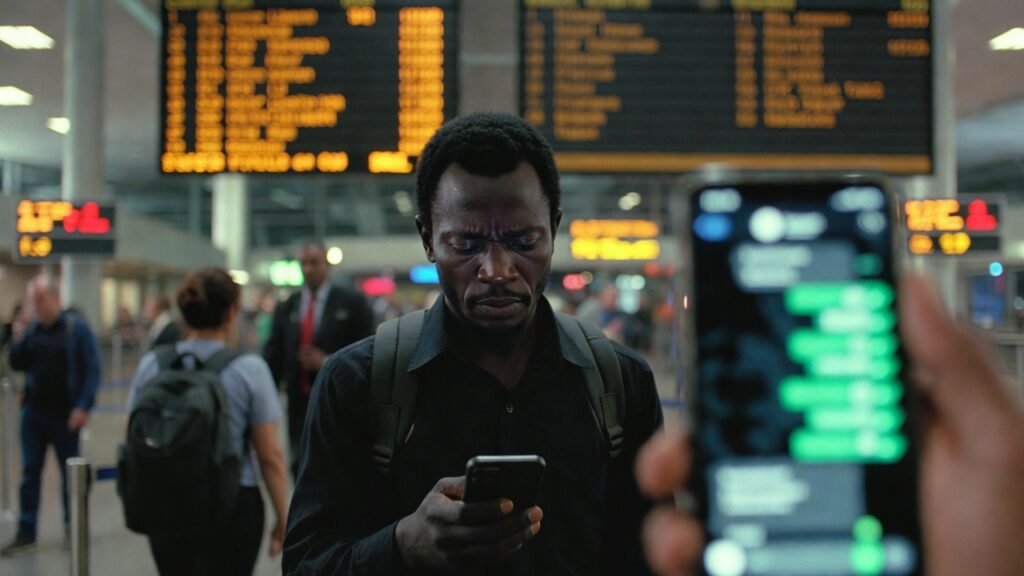
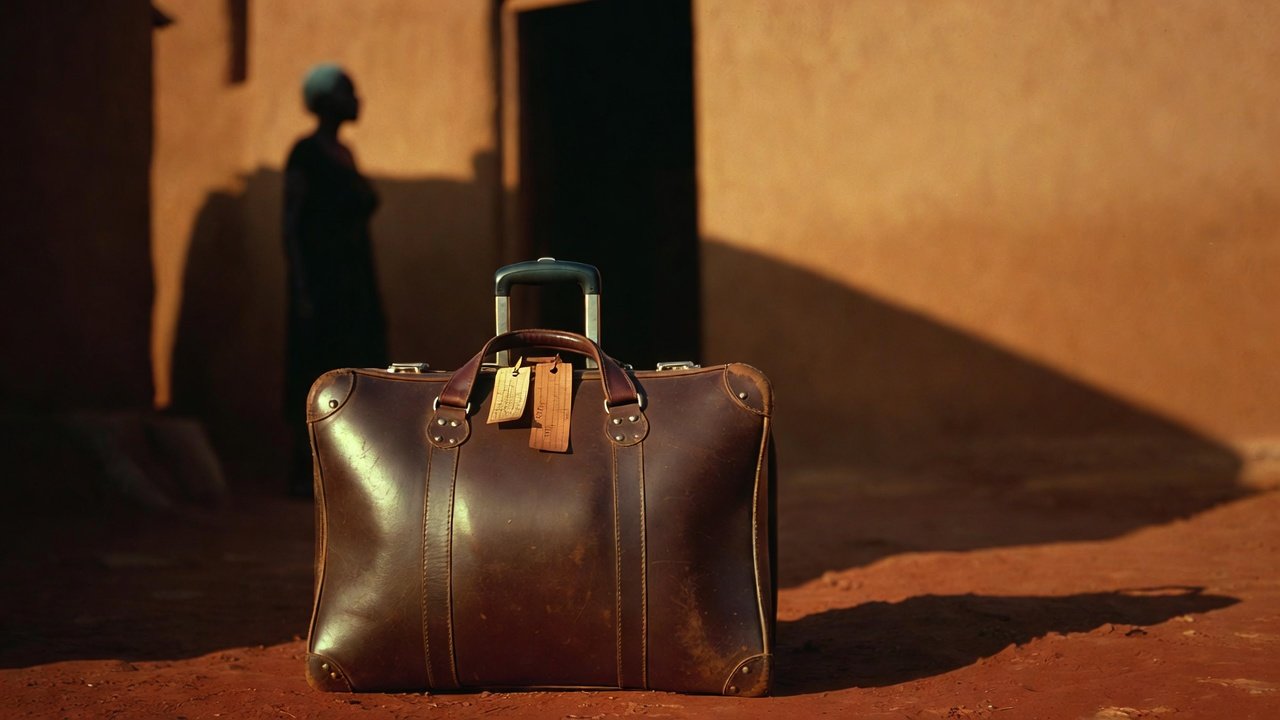
Just don’t let the news reach the family headquarters. That is where the devil lives, not metaphorically, but practically in the form of the cousin who will tell the uncle who will begin calculating his share of whatever blessings are coming before the visa has even been stamped.
When we were kids, we heard stories about men whose faces changed at the airport, from male to female, transformed by spiritual interference at the very point of boarding. Whether they were true or not, stories like that shaped how we move. They became the reason a friend could eat noodles with you at 11pm and be abroad the next day without a single word of warning. That is not secrecy. That is how we beat the devil here.
A few weeks after departure, extended family members start to notice the absence. The mother deflects. He has a job in faraway Salaga, she says. He will be away for some time. The story holds for a while. Then the very person being shielded from extended family eyes posts a WhatsApp status in an exotic location with the caption,” What God cannot do does not exist.” A cousin saves it instantly and posts it in the family group. The Salaga story is over. The Lord has finally done it for them.
And the list and expectations begin.
The list travels faster than the suitcase. So does this newsletter.
Subscribe free — no noise, just the satire
The List
The list did not arrive with the visa approval. It was always there, waiting for a destination address to send itself to.
Before the plane lands, before the suitcase clears customs, before the new Abusuapanin has found where the nearest bus stop is or figured out why the weather is doing what it is doing to his skin, the list has already arrived. It travels faster than any aircraft and requires no passport. It clears customs without being declared.
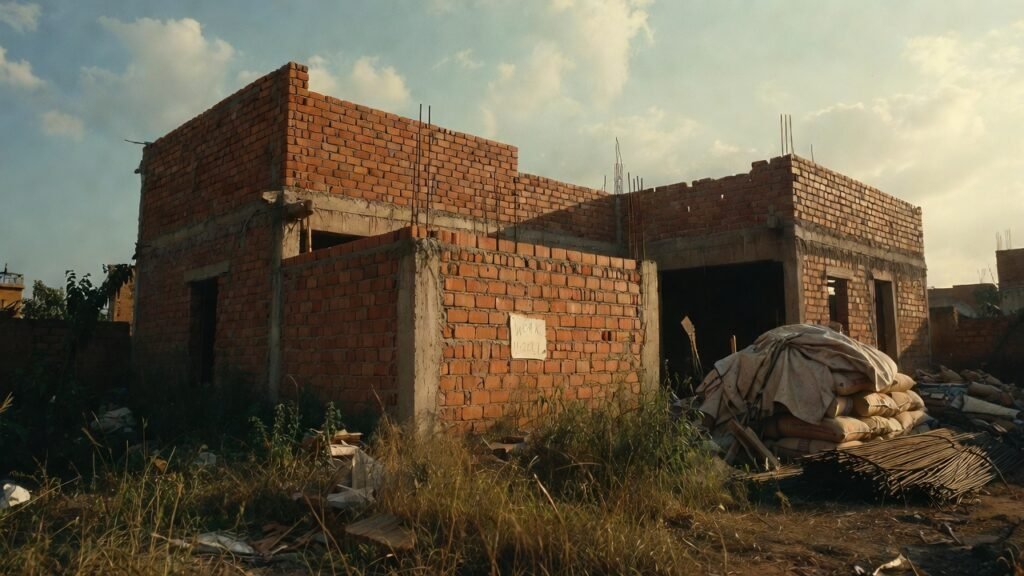
The family house is on the list. It has been on the list for years. The understanding being that whoever makes it to Obroni Krom first will help finish it. It reached lintel level and has been at the lintel level ever since.
A few years later, the new Abusuapanin sends some money that makes the project resume some progress until it grinds to a halt again. Not because the money stopped coming. But because money has a way of arriving at an account and redistribute itself across urgent priorities that were not on the original list. Then new items or projects joined the list through the democratic process of the family WhatsApp group, where every financial emergency is a motion that passes by unanimous silent consent. But in reality, those new lists don’t exist as actual projects but live in people’s pockets.
The hospital bill is on the list. It arrives without warning and without an itemised breakdown. It arrives as a number, large, specific, non-negotiable, attached to a name, a diagnosis, and the implicit understanding that the person abroad is the only one with access to that kind of money. This assumption is not always accurate. It is, however, consistent. And it does not wait for a convenient moment.
The cousin’s visa application is on the list. Two applications were already rejected. A third in preparation. It requires documentation, a bank statement, a letter of invitation, and a sponsor with sufficient financial standing to guarantee the cousin will not become a burden on the destination country. The new Abusuapanin is the sponsor. The cousin has already told her friends she is going abroad (breaking the unwritten rule), making the invitation letter no longer optional.
The community project is on the list. It has a committee. The committee meets and sends updates. The updates describe progress in a language that sounds like progress but does not contain photographs of anything that has been built. A plaque exists though, but it was installed at the launch ceremony. The thing the plaque will be attached to is still being planned but the photographs from the launch ceremony are very good and have been shared in the diaspora WhatsApp group for their community where the funding was first solicited.
The House That Was Never Built
Like many borgas before, the new Abusuapanin eventually wants to own something back home. A house. Something solid. Something that says the sacrifice was real and the money went somewhere visible.
A trusted friend is identified and an agreement is reached between them. Money begins moving for the land first, then for building materials, then for labour. Progress photographs arrive regularly. The foundation looks promising, and the walls are rising. Finally, the roof is also on and radiant like the early morning sun. The house is complete and fully furnished.
Then the new Abusuapanin returns for the holidays, and inadvertently finds that the plot of land that was supposed to have the house has a cassava farm on it. The worst part of it is that the land does not even belong to him. No house, no building materials, and the trusted friend is unavailable for any comment. His heart is broken to smithereens as a consequence of that.
This is not a unique story. This is a category of story. It has happened enough times to enough borgas that it has its own quiet acknowledgment in diaspora conversations, the nod that passes between two Ghanaians abroad when the subject of sending money home for property comes up. The nod that says yes, I know someone. Everyone knows someone, but is the someone trustworthy?
The Marriage That Was Not Asked For
The parents have thoughts about marriage. The wife will obviously not be a white woman. Neither will she be one of the, and this is a direct quote from many Ghanaian mothers, disrespectful ones abroad who have forgotten their manners. She will be someone identified from home. Humble. Respectful. Someone whose family is known, and can keep a home.
The call arrives, and the news is delivered with the warmth of a generous gift. We have found someone for you. A few video calls are arranged. The new Abusuapanin, exhausted from a week of twelve-hour shifts and a visa renewal anxiety spiral, calls on a Sunday evening and admits that yes, actually, she seems nice. Mummy is always right.
A ceremony is organised and the location is negotiated. In some versions of this story, a glamorous wedding takes place via Zoom meetings. Families are gathered, with the groom, over 5000 miles away. There are exchanges conducted through screens, kisses transmitted via call buttons. The dress is beautiful, and the jollof is on both tables. The internet connection also holds for most of it.

Whether this is tradition adapting or tradition being quietly replaced by something that looks like tradition from a sufficient distance, that is a debate for another satire. What is not debatable is that the new Abusuapanin funded the wedding, the bride price, and the transportation for the family members who came to witness the Zoom wedding in person. Thanks to technological advancements for making such marriages possible though.
What We May Not Know
Ghana received $6.65 billion in official remittances in 2024. When informal transfers are included, the figure rises to an estimated $11.5 billion. Nearly one third of all the foreign currency Ghana receives comes not from cocoa, not from gold, not from the IMF but from the pockets of ordinary Ghanaians living abroad, paying rent in cities where rent costs what some Ghanaian government workers earns in a year, but they keep sending money home anyway.
Nobody does the full maths. Not the family, not the government that celebrates remittance figures in budget statements and presents them as evidence of diaspora loyalty rather than evidence of a system that exported its people and is now sustained by their absence.
The calculation includes the transfer fee, currently averaging 7 percent of every amount sent. For every hundred cedis of value that arrives at home, seven cedis evaporate at the border of the international financial system before the family sees it. The maths includes the exchange rate, which moves consistently in a direction that benefits the currency the Abusuapanin does not earn.
Then there is the phone plan for international calls to reach family back home. Further, there is the flight home for the funeral that could not be missed, the wedding planned without prior consultation, and the family meeting that required physical presence because some things cannot be resolved through WhatsApp voice notes no matter how long they are.
Researchers call this Remittance Obligation—the social and moral pressure on diasporas to send money home regardless of their own financial situation. It has been studied for years. It has its own academic literature. The new Abusuapanins did not need the literature to know it. They felt it before their planes landed.
Nobody does these calculations because the new Abusuapanin is abroad. Being abroad means having money. Having money means the financial burden is primarily your problem. This is the equation. It does not ask permission, and does not offer an opt-out. It’s not just a Ghana diaspora satire, but the absolute truth about the reality for the Ghanaian diaspora.
The Other Side of The Door
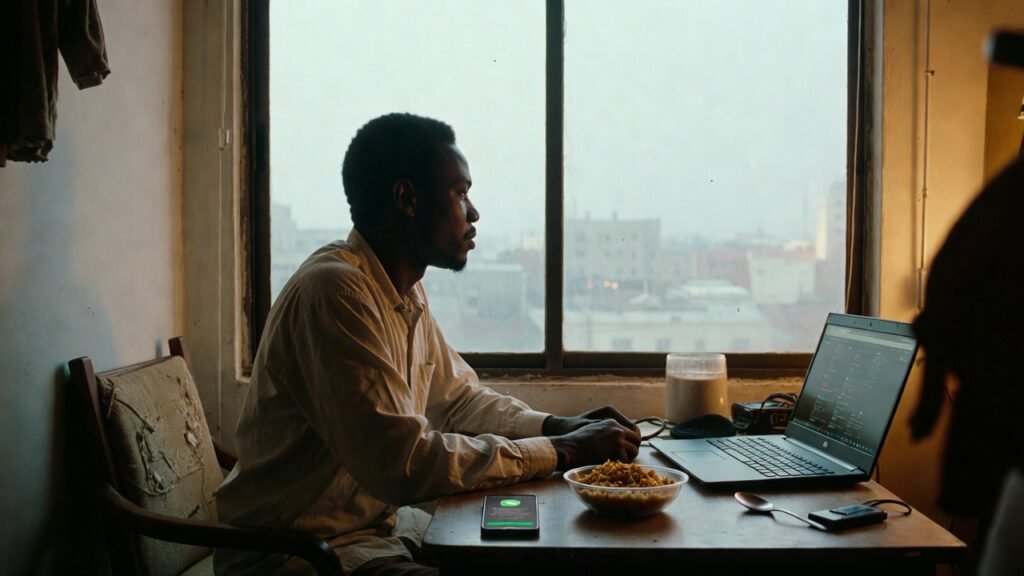
Here, Ghana Diaspora satire examines what the family does not see from Ghana.
The new Abusuapanin arrived with a suitcase, a qualification, and the particular optimism of a person who was told their whole life that the only thing standing between them and success was the opportunity to go somewhere that would recognise what they are worth.
The opportunity arrived, and the somewhere turned out to have its own list.
The job that was supposed to be the stepping stone turned out to be the saving grace because the next step required local experience, and local experience requires already being local, and being already local requires time, and time requires rent, and rent requires the job that was supposed to be the stepping stone. The wheel turns wherever a better opportunity appears.
The visa category that brought them here is under review. The occupation codes that made the journey possible are being eliminated one by one by governments that needed the labour when the labour was needed and are now reconsidering the arrangement now that the need is less visible. The policy update arrives on a Thursday morning, and the family WhatsApp group sends a new hospital bill on Thursday afternoon. The two events do not know about each other, but they meet anyway, in the chest of the person reading both.
The weather is also doing something to the body that nobody warned about. Not just the bitter cold, the specific grey weight of months without sunlight, without the smell of kelewele from a roadside, without the particular noise of a Ghanaian neighbourhood that tells you, even in its chaos, that you are somewhere you belong.
Homesickness in diaspora Ghanaian life is not a feeling. It is a chronic condition managed daily with jollof rice cooked in a foreign kitchen without the right pot, and Ghanaian music played through a phone speaker at a volume that will not disturb the neighbours.
But remember the family dog is still waiting for the package.
The Closing: Imagination of Happiness

The new Abusuapanins are not just the ones living abroad. They are also the ones living between a world of expectations and one of reality.
They cannot fail. Not because of themselves, and not because of their parents or siblings. But because even the family dog, the one that belongs to the great-grandfather’s adopted son, is still waiting for the aburokyire bone. And you cannot disappoint a dog that has been waiting that long.
So they do what Ghanaians have always done with the boulders called politicians. They push and continue to push. They still send money, and call about the house at the lintel level. Also, they play the music at neighbour-appropriate volume and laugh in the WhatsApp voice note. They always try to find a way.
And on that walk, between the Thursday morning policy update and the Thursday afternoon hospital bill, something looks, from a distance, remarkably like happiness.
One must imagine the new Abusuapanyin happy.
Not because there is no hardship there, but because we believe that, no matter what, it can never get worse than what Ghana offers. To us, abroad is the closest we can get to Heaven, and so we dream every night about making it there, at least, and pray our relatives out there do well enough to support us back home.
The Brewed Satire
Disclaimer: Exaggerated for a satiric effect
Share via
Tags
Get every Brewed Satire free in your inbox → Subscribe on Substack