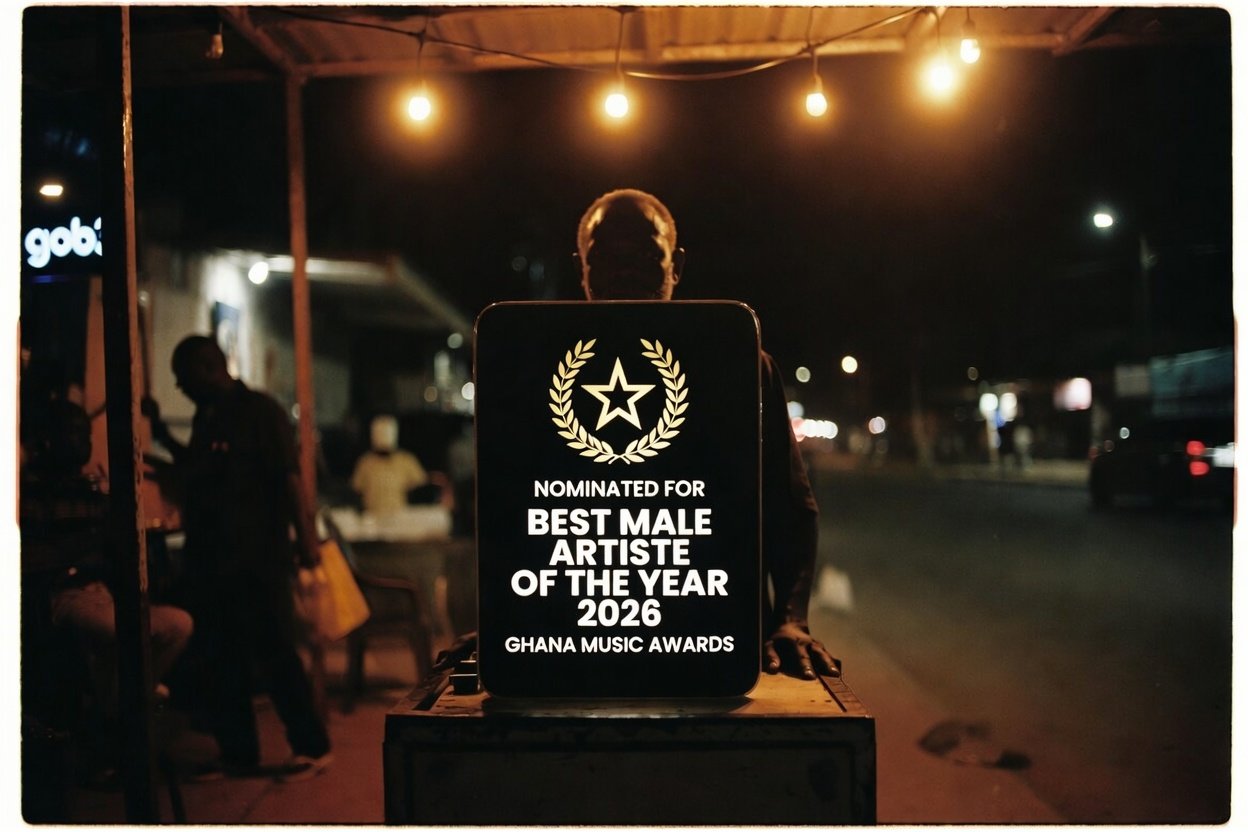
Begoro, Ghana—I saw the Ghana music awards nominations controversy land on my phone the same way everyone else did: one moment nothing, then a nominees’ party photo and a list, and Kwaw Kese already on X comparing the whole thing to gɔbɛ. Anyone who loves to scroll may have scrolled past or into the news at some point. I had to laugh. Not because the comparison was unfair, but because gɔbɛ is not something you say when you are being cruel. You say it when the thing has become so comfortable in its own reduction that labelling it feels almost affectionate.
The 27th Telecel Ghana Music Awards dropped its nominations on Saturday, March 14, 2026. No countdown. You remember last year’s? It felt like we were going to take a slothful walk to this year’s. Guess what, this year’s is already in the rearview at the pace of a hare. There was no announcement that an announcement was coming. You woke up and the list existed. Charterhouse, the company that has organised Ghana’s biggest music night and soap opera since 1999, did what it has always done: it produced the nominations the same way the rains flood Accra every year. The thing returned. That is the whole explanation.
I am not here to argue about who deserved to be nominated. That argument is older than most of the artistes on this year’s list. What I want to look at is what happened after, because what happened after tells you something this industry cannot say about itself: how Ghanaian institutions handle the space between what they promise and what they deliver. That space, chale, is the space The Brewed Satire was built to measure.
Twenty-Seven Years, Same Saturday
The TGMA is 27 years old this year. Ghana was different in 1999. There was no Telecel sponsorship, no X discourse, no management teams with formal letters to Boards. There was Charterhouse, a vision for an industry, and the belief that Ghanaian music deserved a night with a red carpet.
That belief was correct. The TGMA made careers. It gave legitimacy to genres that radio treated like street noise, sent hiplife from trotro conversations to trophy podiums. When Kwaw Kese won Hiplife Artiste of the Year in 2009, he held the trophy without arguing about the process. He screamed ‘abɔdam’ like he discovered madness on that stage. However, it was an epic night of musical culture and identity. The TGMA meant something, and the evidence is that people kept caring deeply whether they were nominated or not.
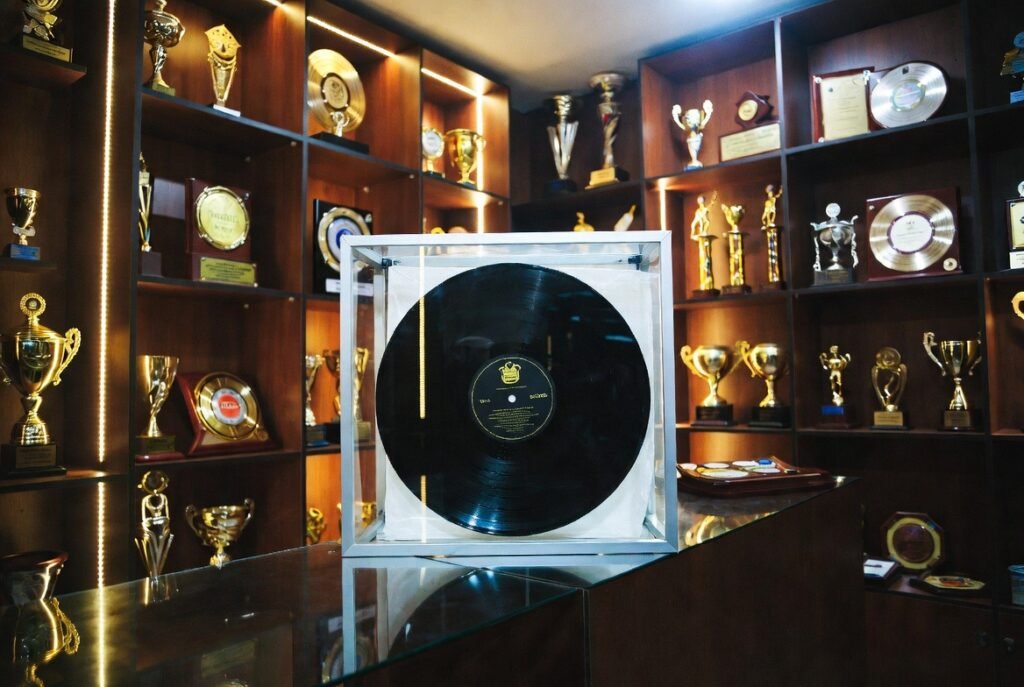
Twenty-seven editions later, the nominations dropped on a Saturday with no prior announcement, a Best Group category was missing entirely from the list, an artiste’s team had to write a formal letter requesting clarification on three absent submissions, and a gospel singer with clear insider knowledge of the process chose not to share what she knew. This is not decline. It is the kind of institution that has survived so long it has mistaken its survival for a methodology. If you want to understand how this connects to the broader pattern of how Ghanaian institutions explain their own survival, the music industry is rarely where people look first, and it is always instructive.
The Controversy We Were Always Was Ready For
Two days after the nominations dropped, Kwaw Kese posted on X and called it gɔbɛ. His words: “Ghana Music Awards turn gɔbɛ. You just wake up one day and there’s a nominees party and you ask yourself how and when people got nominated.” The post circulated the way only Ghanaian music discourse circulates: quickly and loudly, with everyone holding a strong opinion about the man who said it.
Gɔbɛ, for the record, is not a bad meal. It is gari and beans served with fried plantain, available at the roadside at a price that requires no calculation. It is the meal that exists when nothing else does. When Kwaw Kese called the awards gɔbɛ, he was not saying the food is terrible. He was saying: this is what we have settled for.
Charterhouse responded through its Head of Public Events and Communications on Hitz FM. The response noted that critiques carry different weight depending on who makes them, and suggested that broad criticisms create confusion unless the critic specifies exactly which part of the awards structure they are challenging. This is the institutional equivalent of asking a man who ordered gɔbɛ to explain more precisely what he wanted for dinner before you will agree to consider the menu. It joins a long tradition of Ghanaian institutional self-defence that spans sport, music, and government alike.
This lands in your inbox every Tuesday and Friday without any controversy.
Subscribe free — no noise, just the satire
The Letter and the Missing Category
While Kwaw Kese and Charterhouse circled each other on Hitz FM, AratheJay’s management team did something more formal. They formally wrote to the Board and Academy of the TGMA requesting clarification on three specific absences: “The Odyssey” from Album/EP of the Year; “Put Am on God” from Best Rap Performance; and “Cover Me” from Best Male Vocal Performance. Three submissions the team said were entered and vetted, then absent from the final list with no explanation. Honestly, I don’t understand how The Odyssey album could not get a nomination even though I promised to stay above arguments. Any Ghana music head or an avid lover of good music who listened to the album as well as the others that got nominated, would tell you, it at least deserved to be nominated. Same applies to Kojo Cues’ KANI album. Brilliant from start to finish. But at the end of the day, it’s Charterhouse’s world, we are just refugees from mars.
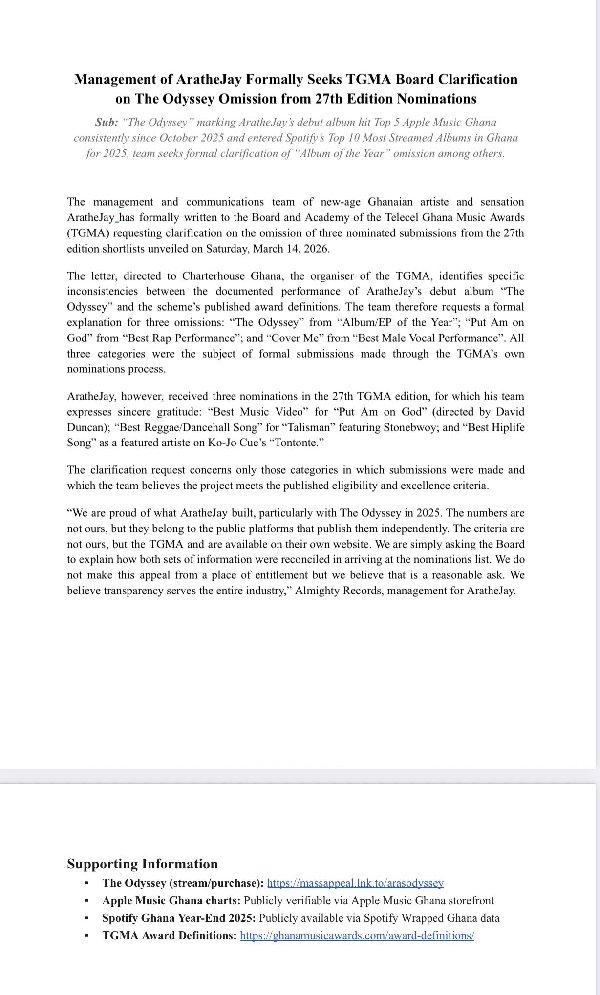
The Best Group of the Year category had also been missing from the initial nominations release. Not reclassified. Not merged with another category. Absent. It appeared after public outcry, which is one way to manage a nominations process, and there are other ways.
Empress Gifty, who has won at previous editions, confirmed publicly that she knew things about the nominations process she had chosen not to reveal. Whether it’s grapevine knowing or official knowing, we can’t dispute her at all. This is a category of statement Ghanaians understand instinctively. It means: I have been inside the transformer room and I have decided you do not need to see what I saw. It is not a denial. Actually, it is a preservation, and what it preserves is always the institution.
The Review That Reviewed the Review
The TGMA Board announced a one-week “Errors and Omissions” window after the nominations dropped. Industry stakeholders could raise concerns, flag absences, and formally petition. AratheJay’s team used the window. Others used the window. Empress Gifty presumably observed it from a vantage point she has chosen not to share.
At the end of the week, the Board concluded. The nominees list remained unchanged.
Read that again slowly. There was a formal review period. There were formal submissions. The Board convened. The outcome: the Board had been correct the first time. This is not unique to music awards in Ghana. It is the signature response of every Ghanaian institution that has ever held a review. The review confirms the original decisions. The institution thanks the review. Everyone goes home. If this pattern is familiar to you from watching Ghana’s habit of convening reviews that confirm their starting position, that familiarity is not a coincidence.
What the Country Hears When It Hears “Gɔbɛ“
Kwaw Kese did not choose that word randomly. Gɔbɛ is not imported for comedic convenience. It is entirely Ghanaian in its associations. You do not find it on a printed menu. You find it at a roadside spot, served by someone who stopped explaining the process.
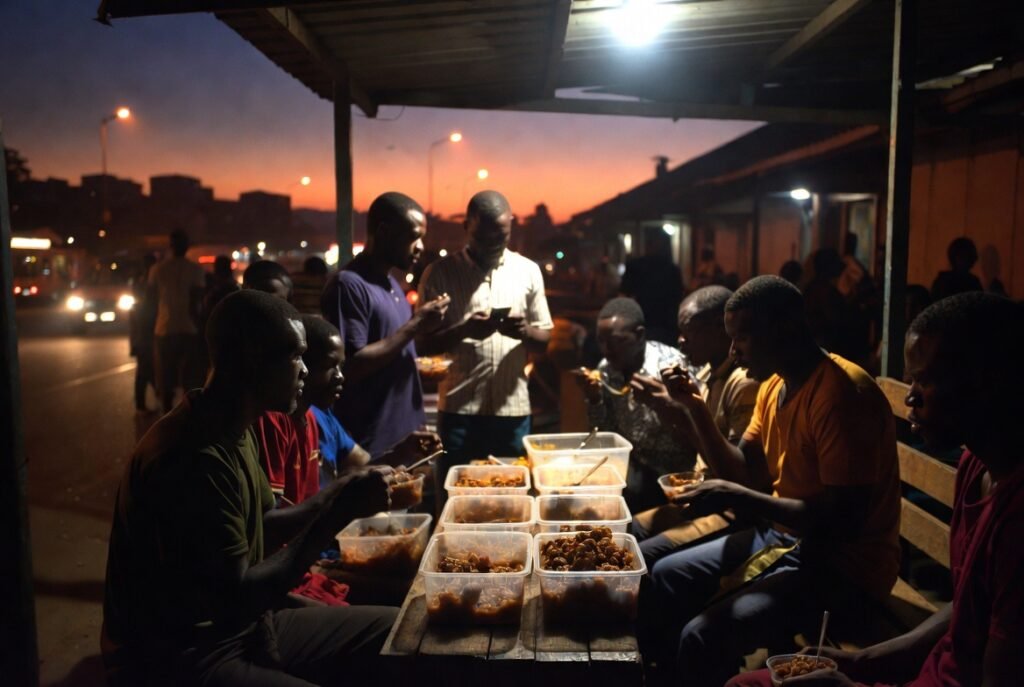
This is what he was describing: an institution that stopped explaining how it is made. The thing about gɔbɛ is that people keep eating it. Not because there are no other options, but because it is there, it is familiar, it fills the space, and asking for something different requires a conversation nobody has agreed to have yet.
The Ghanaian music industry keeps producing nominations, artistes keep accepting them, managers keep submitting letters to Boards, and Boards keep reviewing the letters and confirming their own conclusions. For the Ghanaians reading this from Atlanta or London, the TGMA debate maps cleanly onto every conversation about home you have had at a reunion where someone raises a problem and someone else says but look how far we have come. The problem does not disappear. It becomes the background.
The Nominees Are Happy
The 27th TGMA ceremony will hold soon, and from a certain angle, it will look like a triumph. The stage will be built properly. Furthermore, the cameras will find their positions. An artiste who has been waiting will receive an award that finally names what they have been doing for years. Someone in the crowd will cry. Someone backstage will forget every letter they ever submitted. These things are real. Someone may pull a gun on stage, that’s also real. Ghana is home of Comedy Central.
What Happiness Means
One must know, the nominees are happy. In Ghana, happiness at an awards ceremony is not complicated by how the nominations were assembled. It is felt at the moment the envelope opens, and in that moment the formal letter from AratheJay’s management, the missing Best Group category, Empress Gifty’s undisclosed knowledge, and Kwaw Kese’s comparison to a roadside meal all dissolve into the sound of applause.
The boulder rolls back down. The institution surveys the hill and begins preparing for the 28th edition. By then, we will have forgotten everything except who won Artiste of the Year and most importantly who didn’t win, which is, when you consider it carefully, exactly what we were counting on.
The Brewed Satire.
Disclaimer: Exaggerated for a satiric effect
Share via
Tags