I heard the announcement on a Wednesday morning in early April. The kind that makes you look up from your tea and think, briefly, that things are turning around.
Ghana’s inflation, said the voice on the television, had fallen to 3.2 percent in March 2026. The fifteenth consecutive month of decline. The lowest Ghana inflation rate in nearly thirty years, since August 1999, when most of us were still in school uniforms. The Government Statistician, Dr. Alhassan Iddrisu, called it “a steady and sustained movement towards stability.” The Bank of Ghana had cut its policy rate to 14 percent, the Reference Rate sat at 10 percent for April. From the virtual press briefing, you could almost hear the satisfaction in the room.
This was not manufactured triumph. It was methodological. Ghana earned this number through genuine pain. From a crisis peak of 54.1 percent in December 2022, the country fought its way back through an IMF program, debt restructuring, cedi stabilisation, and three years of households absorbing what policy could not fully cushion. The 3.2 percent is real, and it matters.
Still, I walked out of the house that morning and learned what the fare was going to cost from next week. The union had given the government 48 hours to fix the fuel taxes. If nothing changed at the pump, the price was going up.
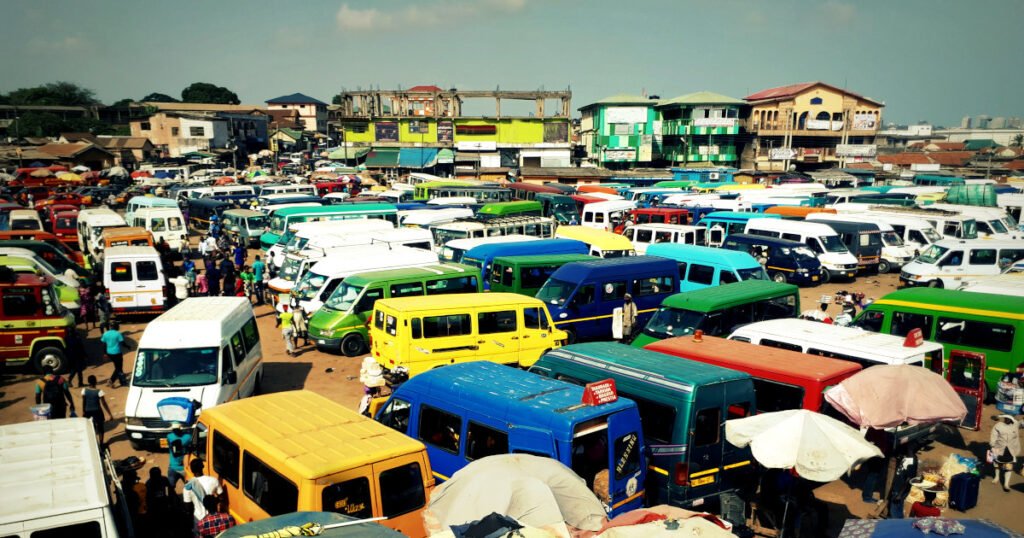
I ran the mental arithmetic that every Ghanaian does before consciously deciding to do it. The coming fare, the bread I bought on Tuesday. The ECG bill also arrived the same morning as the good inflation news.
Chale, something in these numbers is not talking to each other. This is the story of Ghana’s inflation and cost of living in 2026 in miniature.
The Milestone Is Real and It Matters
To be fair to the Ghana Statistical Service, the numbers behind the celebration are credible. Ghana’s headline inflation has collapsed from 54.1 percent to 3.2 percent in three and a half years. That is fifty percentage points of economic crisis walking itself back out of the room, which is not a small thing in any country, and especially not in one that was genuinely wondering in 2022 whether the cedi would stop moving at all.
Consider the machinery behind the recovery. The IMF’s extended credit facility formed part of the architecture. Furthermore, the Bank of Ghana has since cut its policy rate to 14 percent. Food inflation has retreated to 2.3 percent, and even goods inflation, which drove the original crisis, has pulled back to 1.7 percent.
Dr. Iddrisu explained the rest at his press briefing: exchange rate stabilisation following the debt exchange, tighter fiscal management, and the gradual normalisation of commodity prices that had fuelled the original spiral. Taken together, the fifteen-month decline reflects genuine structural work, not statistical sleight of hand.
Real choices, painful ones, got made in those years, and the households who absorbed the shock long before recovery arrived have earned this headline too, whether or not the headline thinks to mention them.
The 3.2 percent is not a lie. It is simply not the whole conversation.
Ghana’s Cost of Living in 2026: What the Poster Does Not Show
The Ghana Statistical Service, in the same briefing that announced the historic low, flagged something that received considerably less fanfare. Services inflation, the number that covers what Ghanaians actually use to organise a day, surged to 7.2 percent in March 2026. The previous month, it sat at 3.7 percent. In thirty days, it made twins.
Look closer at the component breakdown and the picture sharpens. Housing, water, electricity, gas and other fuels recorded 12.4 percent year-on-year inflation, the largest single contributor to the headline figure, adding 1.3 percentage points to the overall number from inside. Education services followed at 8.1 percent, driven by private school fee increases. Insurance and financial services registered 8.4 percent.
Dr. Iddrisu noted, with the careful precision of a man who understands both the data and the room, that housing, food and education together account for 87.5 percent of total inflation. Staggering.
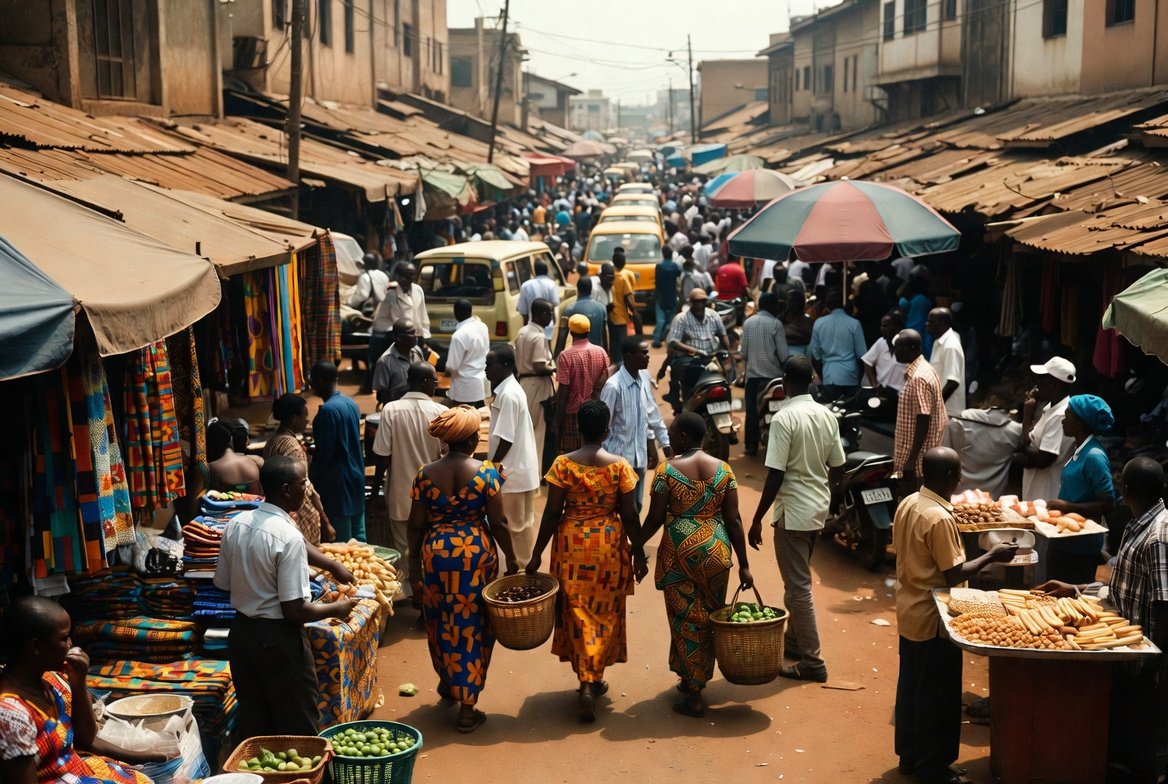
Housing. Food. Education. Not abstract statistical categories but the daily negotiations of Ghanaian life in Accra, the landlord’s letter, the school fees envelope, the market on Saturday where the koko seller has already done her own calculations.
The goods are calm. The life, as a rule, is not.
This lands in your inbox every Tuesday and Friday.
Subscribe free — no noise, just the satire
The Pump Did Not Attend the Press Briefing
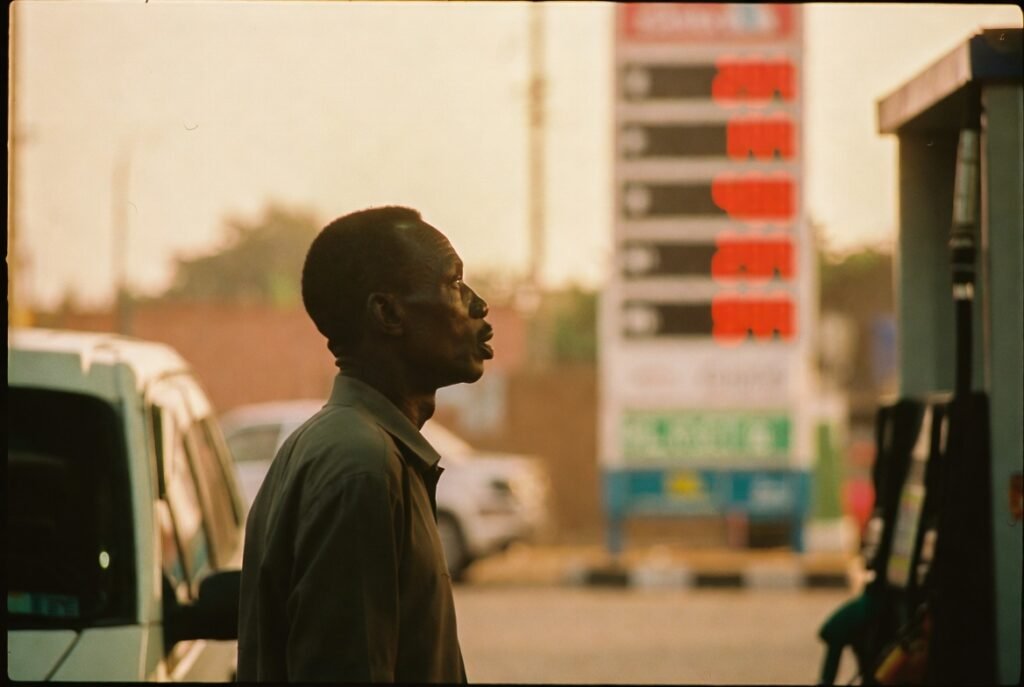
On April 1st, the National Petroleum Authority published the fuel price floors for the first pricing window of April 2026. Petrol: minimum GH¢13.30 per litre. Diesel: minimum GH¢17.10. These replaced the March 16-31 figures of GH¢11.57 for petrol and GH¢14.35 for diesel.
In a single pricing cycle, petrol moved up by GH¢1.73, a 15 percent increase in two weeks. Diesel followed, rising by GH¢2.75.
The Ghana Private Road Transport Union responded with a 48-hour ultimatum to the government to scrap or significantly reduce petroleum taxes, warning that failure to act would force a nationwide fare increase. Samuel Amoah, the union’s Deputy PRO, laid out the reasoning calmly: fuel costs account for over 30 percent of urban transport expenses, and with spare parts rising, DVLA fees elevated, and insurance premiums jumping from GHS 933 to GHS 1,194 for sprinter buses, the arithmetic does not leave room for patience.
Trace the chain and the cause becomes clear. In late February 2026, the United States launched military operations against Iran, crude oil crossed $100 a barrel, and the Strait of Hormuz tightened under the pressure of the conflict. As global energy markets lurched, the cedi edged from GHS 10.91 to GHS 11.05 against the dollar. None of that started in Accra. All of it arrived there.
A coalition of transport operators had already warned the government on March 29th to address fuel price volatility or face a 20 percent lorry fare increase. The GPRTU ultimatum was not the first notice.
A Very Old Argument in a New Suit
There is a headline on a Ghanaian news site that has been sitting in my browser tab since I started this piece. It reads: “Lower inflation does not mean lower prices.” When inflation falls, prices rise more slowly; they do not fall. The bread did not get cheaper when inflation reached 3.2 percent. The rent did not reverse.
The pattern extends well beyond Ghana. Voters in every country where inflation peaked in 2022 and 2023 have returned to their polling stations in a foul mood because the politicians told them inflation was coming down and the supermarket somehow did not update its shelves. The cost-of-living gap between the headline number and the household experience is a global conversation being held locally everywhere at once.
Yet in Ghana, the gap carries a specific texture. We know what the crisis felt like at 54 percent. We know that the recovery, however real, has not been felt at the same speed by everyone at the same address. The borga sending remittances from aburokyire reads the 3.2 percent headline and wonders why the family still needs a top-up. However, the family, for its part, is wondering the same thing.
The number recovered. The rent did not get the memo.
The Statistician and the Trotro Driver
Here is what is simultaneously true. Dr. Alhassan Iddrisu is correct. The headline number is real, the structural work behind it is credible, and marking this milestone honestly matters for a country that spent three years doubting whether stability was achievable.
And yet Samuel Amoah of the GPRTU is also correct. Fuel went up 15 percent in one pricing window because a war started 5,000 kilometres away, the Strait of Hormuz partially closed, and crude oil hit $100 a barrel. Operators cannot absorb that without consequences, and the ultimatum is not theatre. It is arithmetic.
Two men, both in possession of accurate information, arriving at completely different assessments of April 2026. This is not a failure of statistics but the ordinary condition of an economy that has recovered at the macro level while households at the micro level are still watching the fuel gauge. Every Ghanaian knows what tortures their skins the most.
President Mahama has promised fuel tax cuts, and the GPRTU has said it will wait to see the reduction arrive at the pump before withdrawing its fare threat. Ghana’s recovery is real and unfinished at the same time. That, perhaps, is the most honest description of where the country stands this April.
One Must Imagine the Consumer Happy
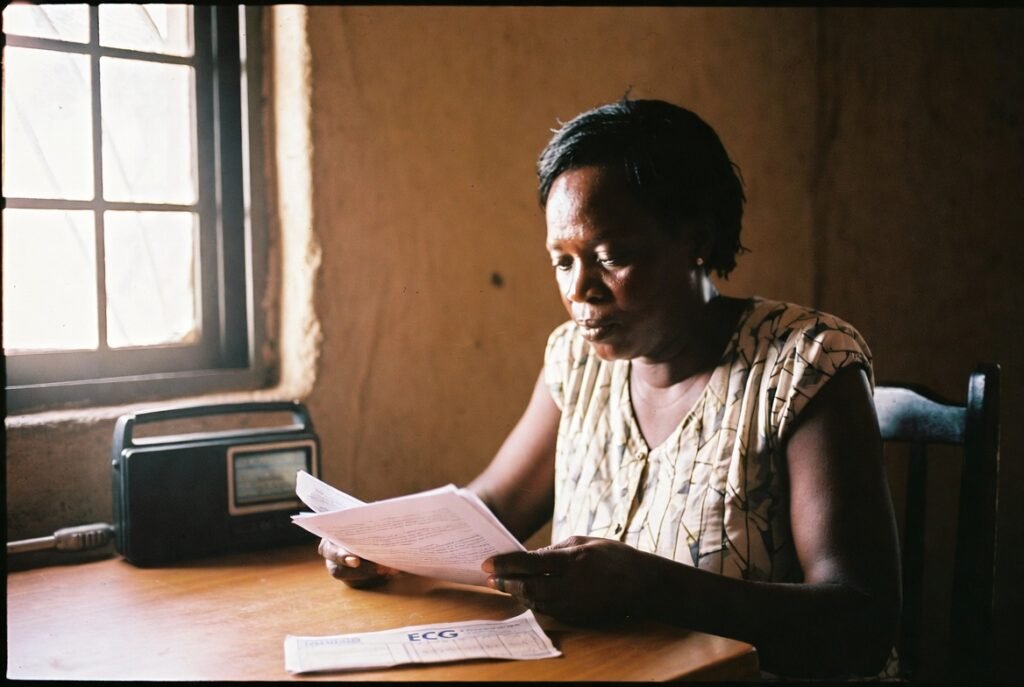
One must imagine the Ghanaian consumer happy.
She wakes up in April 2026 and the radio tells her inflation is 3.2 percent. But she does not disbelieve it. She knows the work that went into that number, the hard years, the restructuring, the cedi finding its footing, the IMF meetings held in rooms she was not in. So she boards the trotro, where the fare is threatening to rise because fuel is up, which is up because the Middle East is on fire, which has always eventually reached her. At the market, school fees are up because private schools are running education inflation at 8.1 percent, and the radio number does not carry that. Back home, the ECG bill is waiting in the housing and utilities category at 12.4 percent year-on-year.
She reads the press release that says things are stable. She believes it. And quietly, in the space between the number and the day, she pays the difference herself. She has always known how to find that gap. Practice, in this country, is never in short supply.
The Brewed Satire
Disclaimer: Exaggerated for a satiric effect
Share via
Tags