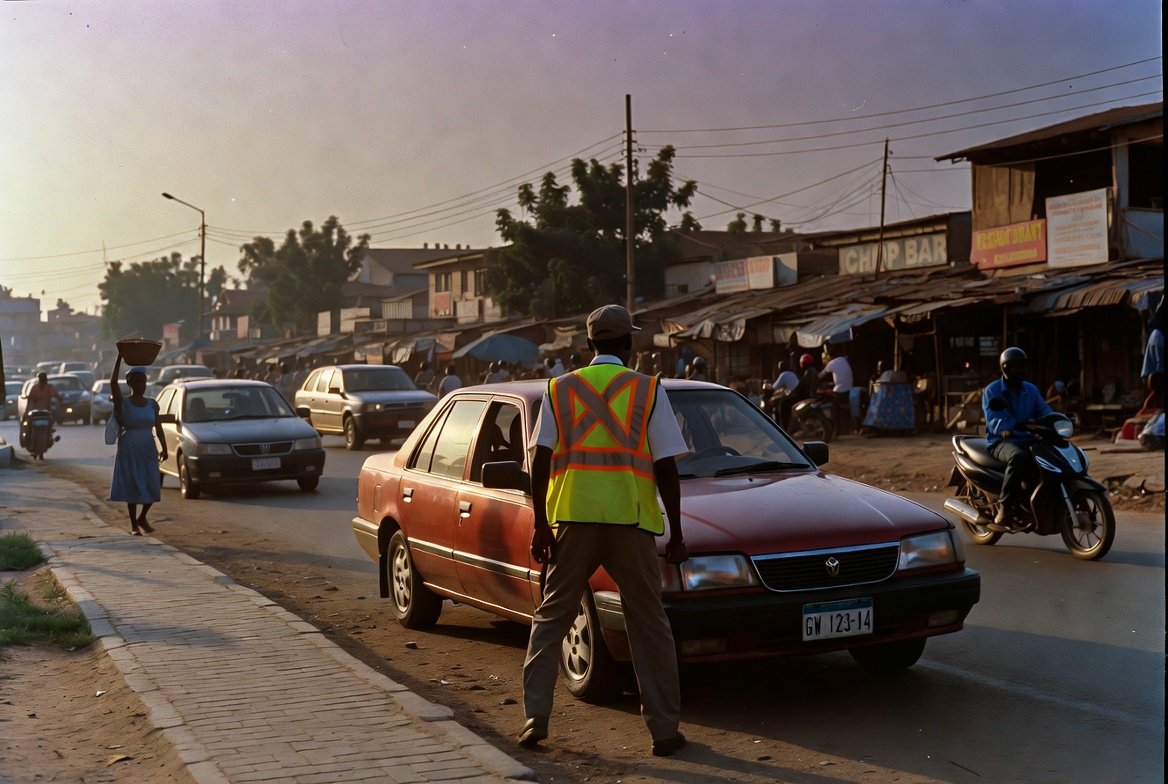
Kwame Sowu has written a very thought-provoking article suggesting Ghana should monetise its idiocy. The argument is simple: London raises over £1 billion a year from parking fines, traffic enforcement, and other penalties for disorder. They have turned bad behaviour into a revenue stream. We have free indiscipline. You can park anywhere, block roads, dump rubbish, pooh anywhere, and walk away. No consequence. No record. No cost. And we wonder why there is chaos.
He is not wrong. This is the problem. Ghana has outsourced its order to the goodwill of people who have no goodwill. We have treated the public realm like a waiting room where anything goes until someone important arrives. The man who has experienced London looked at our system and saw a business opportunity. He saw unemployed youth who could be trained into enforcement units. Handheld devices. Digitised fines. No discretion. No drama. Bad behaviour funds order.
It is a beautiful argument. It is the kind of argument you make when you have just returned from London and the the air of discipline is still fresh in your nostrils, before the taxi from the airport reminds you where you actually are. This Ghana indiscipline monetisation satire dissects Kwame’s article further to highlight a different angle to his proposal.
The Proposal
Sowu’s Ghana indiscipline monetisation proposal is clean on paper. Recruit and train youth into local enforcement units. Equip them with handheld devices. Standardise fines. Remove discretion. Digitise everything. Pay them from the system they enforce. You block a road, you pay. You dump waste, you pay. You violate zoning, you pay. No insults. No arguments. Just payment.
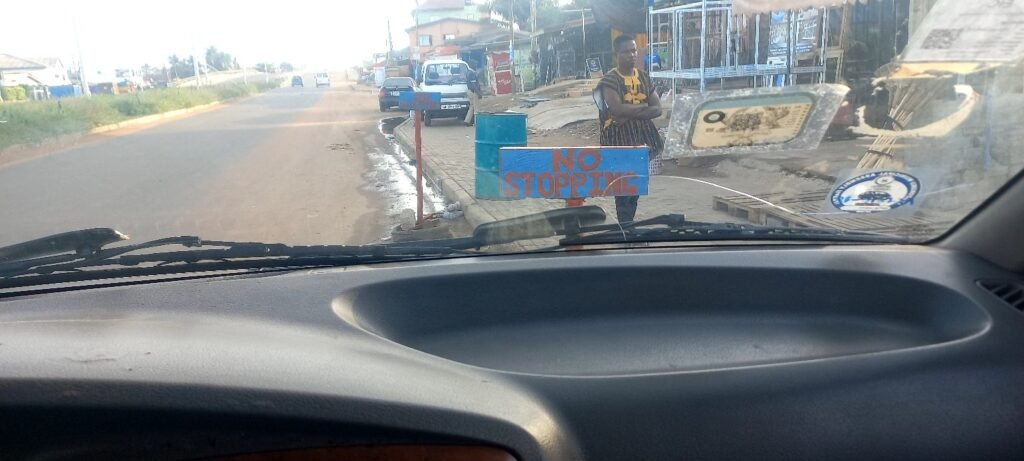
London did not eliminate bad behaviour. It monetised it, then used the proceeds to fund better systems. We are doing the opposite. We subsidise indiscipline and pay for the consequences through congestion, flooding, filth, and lost productivity.
Again, he is not wrong, and has correctly diagnosed that we are managing chaos for free when we could be charging for it.
The Reality
Here is what would happen if we tried to monetise idiocy in Ghana.
First, the handheld devices would be procured. In Ghana, we always procure things. A tender would go out, awarded to a company whose CEO is related to a political bigwig. The devices would arrive six months late, loaded with software that crashes when you try to issue a fine for a car parked on the pavement. Inevitably, the software developer would turn out to be the cousin of another big man, and holds a degree in accounting.
Second, the youth would be recruited and trained for two weeks. The curriculum would cover how to hold the device, how to avoid eye contact with the person you are fining, and how to run when the person you are fining turns out to be the nephew of your member of parliament.
Third, the fines would be issued. A man would park his car across a pavement in front of a shop. The enforcement officer would approach. “Chale, you know who I am?” the man would say. The officer would not know. So the man would make a phone call. That call would reach the district chief executive. The DCE would call the head of the enforcement unit who would call the officer and tell him to exercise discretion. The discretion would be exercised and the fine would be cancelled. Ghana indiscipline monetisation is not an impossible mission but it’s one that will be determined by the powerful few.
The Monetisation That Would Actually Happen
The writer assumes that monetising idiocy means the state collects revenue from the idiot. In Ghana, monetising idiocy means the idiot pays someone else to look away.
There is already a system. It is called “something small for the weekend or the boys.” Cash-based, untraceable, and highly efficient. The enforcement officer who is supposed to fine you for parking on the pavement will accept a negotiated fee in 30 seconds to pretend he did not see you. The fee is less than the official fine and the pavement remains blocked. The officer has monetised your idiocy, and the state has not seen a pesewa.
This is not a bug in the proposal. This is the feature that will eat the proposal alive, because the author imagines a world where discretion is removed. According to a UNODC report on corruption in Ghana, half of all citizens who came into contact with a police officer in 2021 paid a bribe, doing so an average of four times each. In Ghana, discretion is the currency. The person with discretion has the power to convert your idiocy into his lunch money. The handheld devices only adds a layer of technology to the negotiation.
This lands in your inbox every Tuesday and Friday.
Subscribe free — no noise, just the satire
The Committee That Would Be Formed
Before any of the aforementioned happens in this Ghana indiscipline monetisation satire, there would be a committee that would study the London model. They would visit London and receive per diem for a trip that would exceed the first year’s projected revenue from the fines. They would return and present their report, a report that would recommend further study funded by the taxpayers’ money.
This is how Ghana monetises idiocy. Not by fining the man who blocks the road, but by funding the committee that studies the man who blocks the road. The committee’s per diem is the real revenue stream, the blocked road is just the excuse.
The One Thing the Writer Forgot
London’s system works because London has something we do not: the certainty that the fine will follow. Not maybe, not if the officer is in a good mood, and not if your uncle knows someone. The fine comes. You pay or the consequences escalate. The system is indifferent to your connections.
In Ghana, the system is the connections. We have not built institutions that are stronger than relationships. We have built relationships that are stronger than institutions. A peer-reviewed study on trotro driver behaviour in Ghana found that what gets labelled as indiscipline is often a rational response to an enforcement environment where rules are applied selectively and the cost of compliance depends entirely on who is watching. The enforcement officer is not a neutral agent of the state, but a man with a family and unaddressed needs. And there is a likelihood the man he would try to fine for wrongful parking knows his landlord. Guess what happens next after a brief phone call.
Monetising idiocy requires depersonalising enforcement. Depersonalising enforcement requires a state that is more powerful than any individual. We do not have that state. Instead, we have one that is constantly negotiating with itself.
What We Actually Monetise
Let me tell you what Ghana has already monetised. We have monetised patience. Every time you sit in traffic because someone parked on the pavement, you are paying with your time. Every time you walk through filth because the rubbish was dumped on the roadside, you are paying with your dignity and health. Every time you arrive late because the trotro driver had to navigate around a blocked lane, you are paying with your productivity. As I wrote on how Accra’s flooding falls hardest on those least responsible for it, the cost of disorder in this city is never evenly distributed.
These costs are not recorded. There is no receipt. But they are real, and they are the hidden tax of indiscipline. We pay it daily. The state collects nothing from it, and does not even know how to begin collecting it. Meanwhile, as the cost of living continues to squeeze ordinary Ghanaians, this invisible tax falls hardest on people who cannot afford to absorb it.
The Satirical Proposal
If we are serious about monetising idiocy like Kwame Sowu is proposing, let us start with the idiocy that is already monetised.
Let us tax the per diem of the committee that may go to London to study fines. Let us levy a surcharge on every “something small for the weekend” that changes hands at a checkpoint. Let us issue a retrospective fine for every report that was commissioned, paid for, submitted, and placed on a shelf where it has gathered dust since the administration before last.
These revenue streams are already flowing. They are just not flowing into the state’s account. Instead, they flow into pockets, envelopes, and the informal economy that runs parallel to everything we pretend is formal. Ghana’s political survival system has turned this parallel economy into an institution in its own right. Monetise that idiocy. Then we will see real money.
The Call to Action
The writer ends his piece with a call to action: monetise the idiocy, create the jobs, restore the order. It is a noble call. It is the kind of call you make when you believe that systems can be imported, that devices can be deployed, that youth can be trained, and that discretion can be removed.
I believe in all of those things in this Ghana indiscipline monetisation satire. I also believe that the first enforcement officer to issue a fine to the wrong person will receive a phone call from someone who cannot be ignored and the fine will be reversed. The officer will be the lesson. In this system, the only distance between order and disorder is a phone call to someone important. We have launched initiatives like this before, and we know how they always end.
So yes, we should monetise the idiocy but let’s not forget to cut the idiotic phone calls to the big man we know first.
The Brewed Satire.
Disclaimer: Exaggerated for a satirical effect.Disclaimer: Exaggerated for a satirical effect.
Share via
Tags