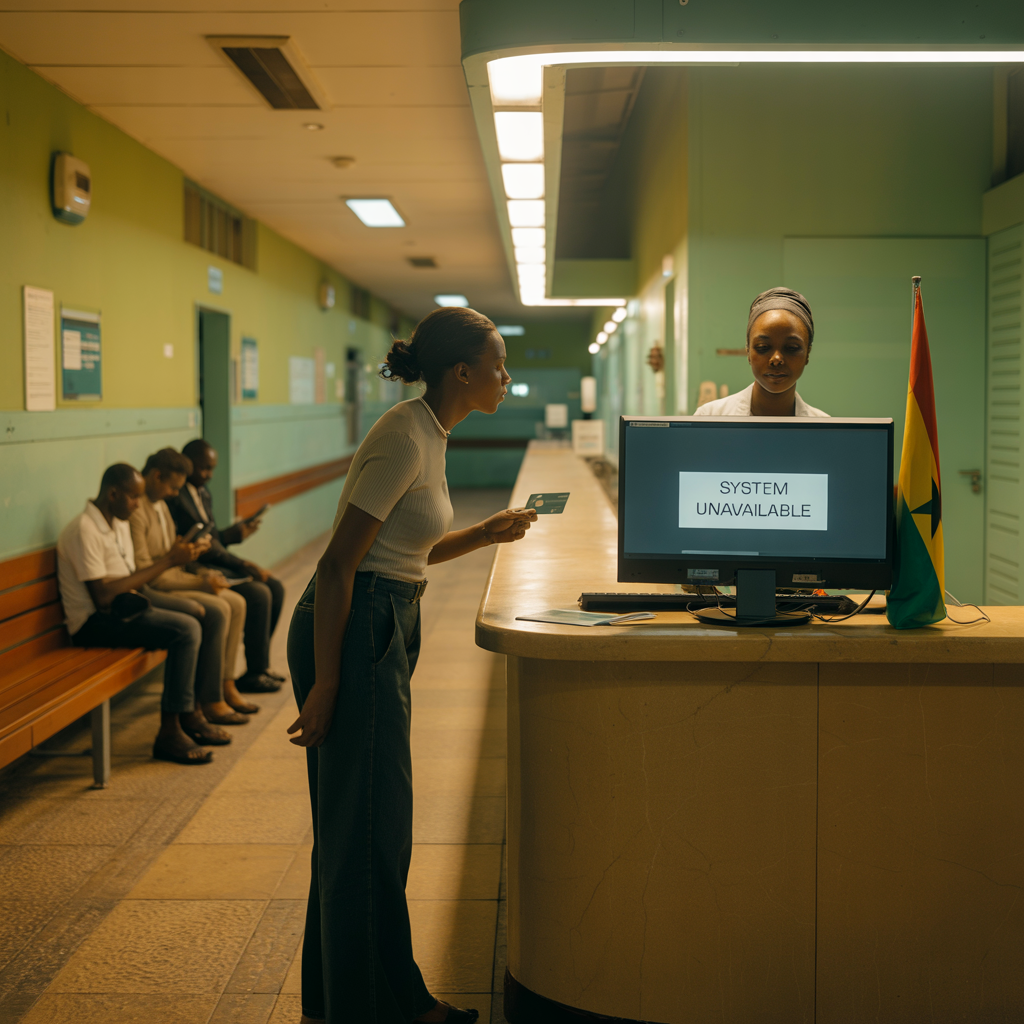
Two stories, two different countries. The first arrived on April 2nd, in a release from the Ghana Foreign Affairs Ministry: from May 25, Africa Day, every African national would receive a free e-visa to enter Ghana. Ninety days. No fee. Come. The continent is welcome here. Ghana joined four other countries (Benin, The Gambia, Rwanda, Seychelles) in a group that, across fifty-four member states of the African Union, represents fewer than ten percent of the continent willing to extend that offer to the rest of it.
The second story arrived on April 22nd. Ghana’s Minister of Foreign Affairs, Sam Okudzeto Ablakwa, had held urgent diplomatic talks with his South African counterpart following viral videos showing xenophobic attacks on Ghanaian nationals in South Africa. The South African government expressed concern, and promised investigations. The egregious videos had already circulated on social media and were difficult to watch.
Twenty days. The same government. The same Minister who had been at the table when Mahama extended the pan-African welcome was now on the phone to Pretoria because the people Ghana had invited to come were being attacked like predators attack preys in a country that shares the same continental commitments to their safety. The timestamps are clear, but the actions are polar opposite.
What Ghana Announced
The free visa policy was not only symbolic, though it was that too. Pan-Africanism is a word that gets used freely and implemented rarely. Kwame Nkrumah built Ghana’s entire postcolonial identity on the argument that African freedom was indivisible: that no single African country was truly free until all of them were, and that the bureaucratic scaffolding of borders, visas, and fees was the colonial architecture reassembled by the independent states that inherited it. Fifty-three years after the Organisation of African Unity was founded on Africa Day, most Africans still need a visa and a fee to visit most other African countries.
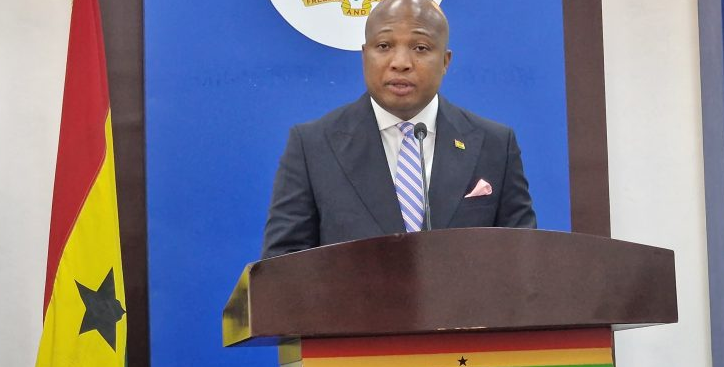
The announcement made Ghana one of only five African countries to extend unconditional entry to every African passport holder. A Malawian needs a visa to visit Ghana. A Congolese needs a visa to visit Ghana. They needed to pay for one. Foreign Affairs Minister Ablakwa called the policy transformative, which it is, in the precise sense that transformation means moving from one state to another. The state Ghana moved from was the one where the continent of Nkrumah’s dreams still required a processing fee. What it moved into was the group of five that actually implemented what sixty-seven AU summits have discussed. Ghana had kept this same pattern of being the country that does the thing the continent agreed to do but hasn’t yet done, and only this time, the pattern was working in the right direction.
What South Africa Did in the Same Month
On March 25, 2026, police in South Africa clashed with anti-immigrant protesters in Durban, where a civic organisation had assembled in the CBD to demand action against undocumented migrants, and a contingent broke off to loot shops before police intervened. In April, in KuGompo, formerly East London, attacks targeted Nigerian businesses following a local dispute about community leadership. By April 22nd, attacks on Ghanaian nationals had been documented in videos clear enough that they reached the desk of the Foreign Minister. To be honest the videos were egregious and inhumane to say the least from a nation that cried for help from the heavy chains of colonialism and the apartheid in the past. Memories do eventually exit skulls, but such memories mould skulls to retain the experiences, and not to transfer such pains to other people because of how unpleasant the experiences were. Yet here we are again, discussing xenophobia.
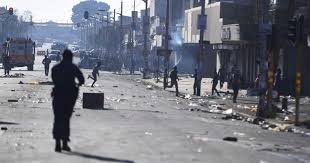
Operation Dudula, the anti-immigrant vigilante organisation that launched in Soweto in 2021 and has expanded across South Africa, had by the close of 2025 blocked undocumented children from accessing public schools and been filmed at a government hospital in Roodepoort preventing entry to anyone unable to prove South African citizenship. Between 1994 and March 2024, xenophobic violence in South Africa resulted in 669 deaths, 5,310 looted shops, and 127,572 displaced people. These are not isolated incidents. They are a pattern accumulated across three decades, fourteen presidents of the African National Congress, and more AU declarations about continental solidarity than anyone has thought to count.
The Ghana Free Visa, South Africa’s Xenophobia.
The gap between the two events, measured in days, is twenty. Ghana’s free visa announcement was April 2nd. Ghana’s diplomatic protest about attacks on its nationals in South Africa was April 22nd. The interval is short enough that the same talking points about Ghana’s historic role in Pan-Africanism, about Nkrumah, about Agenda 2063, about the continent’s future, were still circulating on social media when the minister had to draft a different kind of communication to Pretoria.
Africa has produced, in the same continent and the same month, the most open door in the region and the most documented pattern of violence against the people that door is nominally open to. The countries doing both of these things are members of the same African Union. They attended the same summits. They signed the same declarations about the Africa they were building. One of them issued a free e-visa while the other issued a video of unjustifiable intent.
This lands in your inbox every Tuesday and Friday without any controversy.
Subscribe free — no noise, just the satire
The Pattern South Africa Still Hugs Like A Lover.
The xenophobia in South Africa did not begin in 2026. We have seen this film before, and the sequel has identical architecture. Major waves of violence hit in 2008, 2015, and 2019, with the 2008 attacks alone killing 62 people and displacing 100,000 in two weeks. What changed between 2008 and 2026 is not the pattern but the documentation. Every phone now has a camera. The videos circulate faster. The diplomatic protests come sooner.
What has not changed is the structural condition. South Africa’s unemployment rate sits above 32 percent. The ANC has governed since 1994 and has consistently responded to xenophobic violence with expressions of concern and promises of investigation, followed by insufficient consequence for perpetrators. The Constitutional Court has ruled on the rights of foreign nationals. Operation Dudula has continued to expand its reach. Julius Malema of the EFF condemned the attacks and then used migration as a political lever in the same speech cycle. The South African state’s relationship with its African neighbours is something the rest of the continent has been watching from its own side of the border for thirty years, and the watching has accumulated enough evidence to constitute a conclusion.
What Pan-Africanism Actually Requires
South Africa is Africa’s largest economy, its GDP running to approximately four times Ghana’s at the moment Ghana crossed the $100 billion mark. It has the continent’s most developed infrastructure: roads, ports, financial markets, universities, hospitals. It is also the country from which African migrants are most frequently expelled, harassed, attacked, and killed. The intra-African movement that Agenda 2063 promises, the free movement across a continent that the African Continental Free Trade Area is designed to enable, runs directly into the reality that the continent’s wealthiest member state has produced the continent’s most documented pattern of violence against continental neighbours.
Ghana has been in this pattern before, from the other side. In 1983, Ghanaians were expelled from Nigeria under the “Ghana Must Go” deportation order that gave its name to the striped bags that became a symbol of forced African movement. The bags still exist. They have been moving across the continent since 1983 without a visa, without a consular fee, without a ninety-day limit. The pattern that put them in motion still exists. What Ghana did on April 2nd was position itself deliberately on the other side of that history, by removing the fee from the door and saying everyone was welcome. What South Africa did in April is what South Africa has been doing since 1994: manage the distance between what it signs at AU summits and what happens in its streets.
The Continent Is Both Welcome And Not Welcome.
When May 25 arrives and Ghana’s free visa policy takes effect, the African who travels to Accra on it will be received. The e-visa will be free. The passports will be processed. The trotro to Osu will cost what it costs. Ghana will have kept the promise it made on April 2nd, because Ghana is in the habit, when it makes this kind of announcement to the continent and the world other than its own citizens, it mostly means it.
The African who travels from Nigeria or Zimbabwe or Mozambique to South Africa on the same Africa Day will encounter the continent’s largest economy, its most developed cities, and its most consistent record of deciding that their pleasantries do not quite extend to the African who arrived from another African country. Meanwhile, both countries signed the same AU charter, but Ghana said come, South Africa said do not dare come close to us.
The Brewed Satire.
Share via
Tags