There is a particular kind of Ghanaian satisfaction that arrives with a headline that suggests that Ghana stood firm against a superpower like the United States. Not the borrowed pride of convincing the IMF to put the economy on life support, not the swelling of heads after a peaceful transfer of power. This is quieter. The kind that comes at seven in the morning, before the trotro conductor has informed you, very personally, that you have no change with him. The headline said Ghana had rejected a $109 million health deal with the United States. Washington had asked for access to our health data. We said no. Quiet emphatically.
I sat with this for a few minutes. Arnold Kavaarpuo, Executive Director of Ghana’s Data Protection Commission, had said the scope of the American request “went far beyond what would typically be required for the purpose for which it’s stated.” This is the sentence a Ghanaian leader produces when they want to call something outrageous without using the word outrageous. Negotiations that began in November 2025 ended on April 28, 2026. Ghana walked away. Meanwhile, thirty-two other African countries had already signed versions of the same deal, Nigeria, Rwanda, Uganda and Kenya among them, accepting conditions tied to the Trump administration’s America First Global Health Strategy. Ghana did not.
For a moment, I was proud.
Then I remembered the cloud infrastructure, the health minister said, was built in India.
Washington Wanted the Metadata
The terms of the proposed deal were worth understanding before celebrating the refusal.

Under the America First Global Health Strategy, the US has been replacing the now-dismantled USAID framework with a new architecture of bilateral health agreements. When the United States withdrew from the World Health Organization, it did not step back from African health relationships. It restructured them. The new deals ask African governments to share not just disease surveillance figures but the full infrastructure of their health information systems: datasets, metadata, dashboards, reporting tools, data models, and data dictionaries. In Ghana’s case, up to ten American entities would have had access to this information with no prior approval needed from Accra. Washington was not asking to borrow our health data. It was asking to move in with us.
The Data Protection Commission reviewed the terms carefully, which is the Ghana way of saying: we read it, looked up from the document, and put it down again. It concluded that what was being asked would require Ghana to waive domestic data protection law, handing over the architecture of the national health system to foreign entities on terms that served the requesting party far more than the country being asked. The commission said no. The government backed the commission. Negotiations ended. Perhaps not the dumsor kind of “ended.” As a consequence, one thing will happen for sure—Trump’s ego will be bruised enough that, he will scream “Ghana is a shithole country anyway”.
We Paid $77 Million
In 2019, Ghana awarded a $100 million contract to Lightwave Company Limited for a digital health records system. The Lightwave Health Information Management System, known as LHIMS, was designed to connect 950 health facilities across the country through centralised electronic records. The contract was supposed to run for three years. It was extended twice. The facilities that had not yet been connected were not informed of either extension.
The current administration commissioned a forensic audit.
The audit found the things forensic audits in Ghana tend to find. Hardware cheaper than what was specified. Computers that arrived as a concept rather than a delivery. An $18 million gap between what the contract described and what the truck brought. More than $77 million, over seventy percent of the total contract value, had already been paid to the vendor before the audit concluded that the system had not been delivered as specified.
And then there was the question of where the data was.
Health Minister Kwabena Mintah Akandoh said the cloud infrastructure was built somewhere in India, limiting Ghana’s access and control. Lightwave, the implementing company, denied this. The company said all patient data was stored on Ministry of Health servers in Accra and had never left the country. The Ministry’s own communications office then said the government currently had no access to the main data servers. The forensic audit is with the Attorney General. No one has produced the receipts.
The data had, in the language of Ghanaian migration, traveled. Or stayed. The Minister and the company disagreed on which. No one called it a sovereignty problem at the time. Proper sovereignty requires due diligence, which as expected, was not implemented in the process. However, sovereignty, has turned out, to be a word that activates when the caller has a Washington area code. That is selective sovereignty by the way.
The Commission Was Open the Whole Time.
This is the part the headline does not carry.
The Data Protection Commission that told Washington no in April 2026 was operational during the years Ghana’s health data was allegedly hosted in India. The government that is being praised for standing firm on data sovereignty perhaps inherited a situation in which the same data may have already left the country under a commercial arrangement that a forensic audit later found to be irregular. The language of sovereignty, the phrases vital national security asset and prior approval and data control, arrived in the public record at the same time America asked for our health data access.
The issue is not that Ghana said no to Washington. Ghana has a long practice of principled quiet when the world is pulling in too many directions. The issue is that saying no to Washington required a stronger vocabulary of sovereignty that was not available earlier.
PSA: The Brewed Satire covers what Ghana announces and what Ghana lives. If the gap interests you, subscribe to receive every article the day it publishes.
This lands in your inbox every Tuesday and Friday.
Subscribe free — no noise, just the satire
The Data Is Protected While the Queue Is Still Outside
Let me tell you what the NHIS looks like from the inside of a government hospital queue.
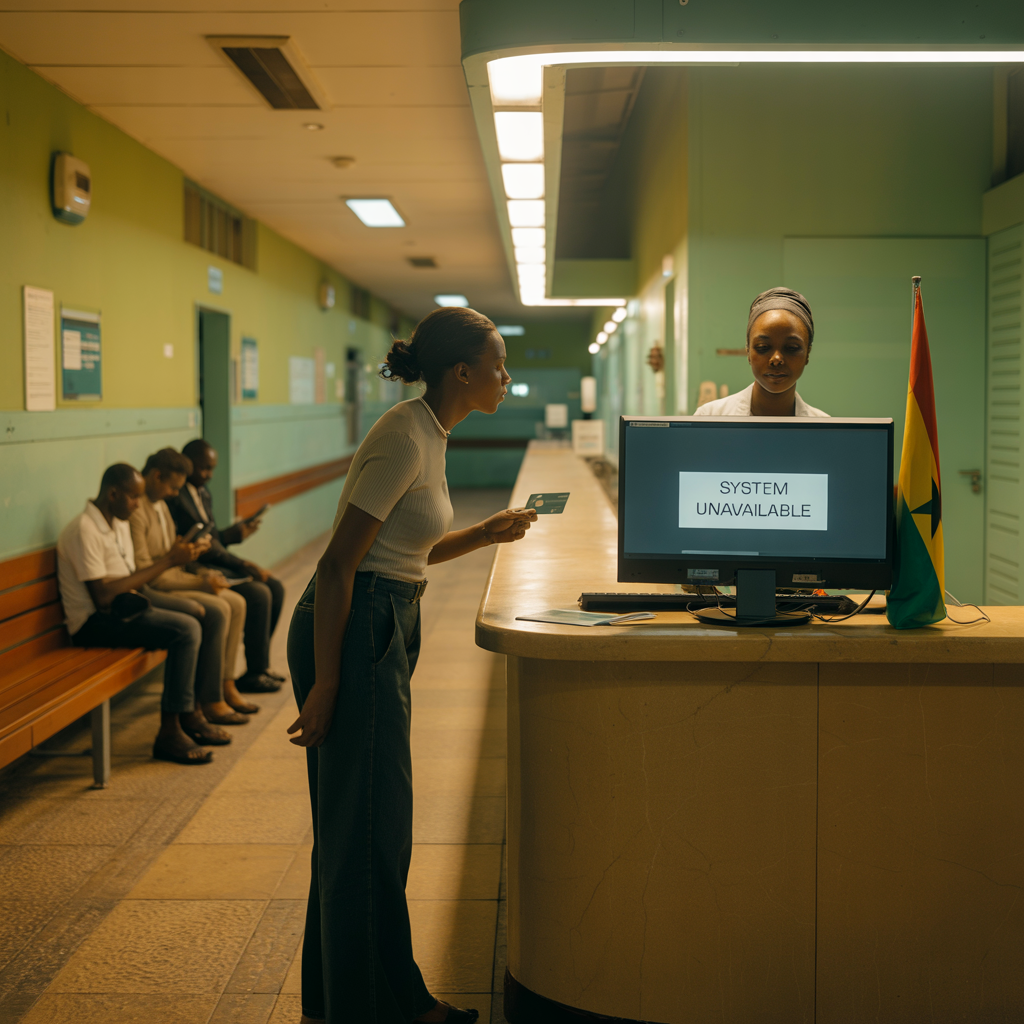
According to an investigation by The Fourth Estate, publicly funded hospitals in Ghana have been quietly turning away NHIS patients. Facilities built with state money, staffed with public payroll, declining cards paid for by workers who have paid the levy on time every month with the quiet confidence of someone who believes the system will work this time, and who arrived at seven in the morning, card in hand, to be told: the platform is down, please come back. The National Health Insurance Scheme was reportedly carrying GHS 2.5 billion in arrears to health providers as recently as early 2025. The broader health sector debt stood at GHS 10.35 billion. The government uncapped the National Health Insurance Levy and announced it as the turning point. By October 2025 the scheme had reportedly generated GH¢9.76 billion and begun clearing the backlog. However, the hospitals that had already stopped accepting NHIS cards were still waiting.
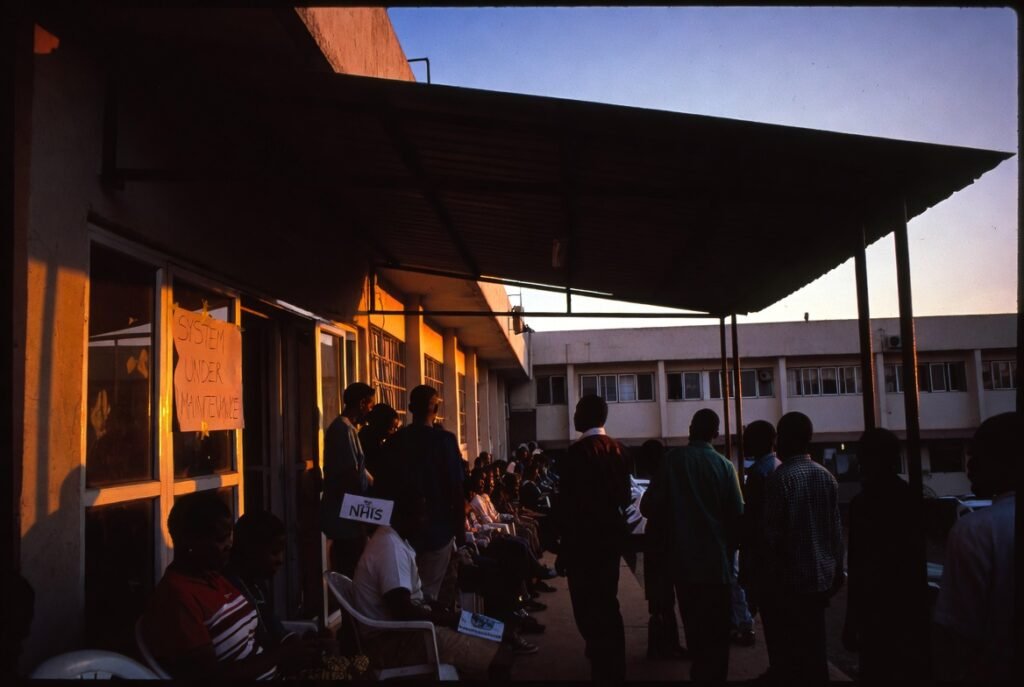
The system that broke down under LHIMS was the same system NHIS patients rely on when they present their cards at facilities. The servers were disrupted frequently. A system that partly delivered in inferior hardware is not a system built for reliability. The patients at the front of the queue when it went down were the ones who could least afford to pay out of pocket.
The data that Ghana has now resolved to protect is the data of this system. It is the data of patients who arrive at government hospitals and are told the platform is down. It is the data of workers who have paid the levy every month for years and cannot reliably use the insurance it funds. It is valuable data. It deserves protection.
The patients the data represents are also valuable. That part is yet to be looked at.
Nigeria Signed. Rwanda Signed. Uganda Signed.
Nigeria signed the deal. Rwanda signed. Uganda signed. Kenya signed before a Nairobi court suspended implementation over the same data concerns Ghana raised. At least thirty-two such agreements, worth a combined $20.6 billion, have been finalised under the America First Global Health Strategy. Most of Africa walked through the door.
Ghana’s refusal is easier to sustain when you are, as Ghana currently is, operating from a perception of relative macroeconomic stability. The politics of no require a perception of something to stand on.
The thirty-two countries that said yes are also standing on something. It is called a deficit. And when big money is involved for African governments, common sense jumps out of the window and never looks back once.
The New System Is Ready. The Old One Is Under Investigation.
The Ministry of Health has procured a replacement for LHIMS. It is called the Ghana Healthcare Information Management System. GHIMS. The previous one was called LHIMS. Only one letter has changed. The press conference was very enthusiastic. The ministry describes GHIMS as fully state-owned and managed, designed to keep health data under Ghanaian control for the first time. Read that again and very slowly. It includes a National Health Information Exchange, a secure platform connecting providers under government regulation, built so that no single company can hold the data hostage and then tell the Minister it is in India while telling the Attorney General it was in Accra all along.
The matter of the old contract has been referred to the Attorney General’s Department. National security agencies are investigating. The $18 million hardware gap. The $77 million paid.
The new system is being rolled out now.
But remember, there will still be a patient in Kumasi who will be waiting three months for a specialist referral under NHIS. The system will go down twice in a week. She has the NHIS card, and the levy leaves her salary on the first of every month. However, because her data now exists somewhere, under government’s full control this time in Accra, protected from Washington by the Data Protection Commission, she should be good or at least pretend to be good. Wishing a happy data independence to her and all Ghanaians—our data is now free forever.
The Brewed Satire.
Disclaimer: Exaggerated for a Satiric effect.
Share Via
Tags