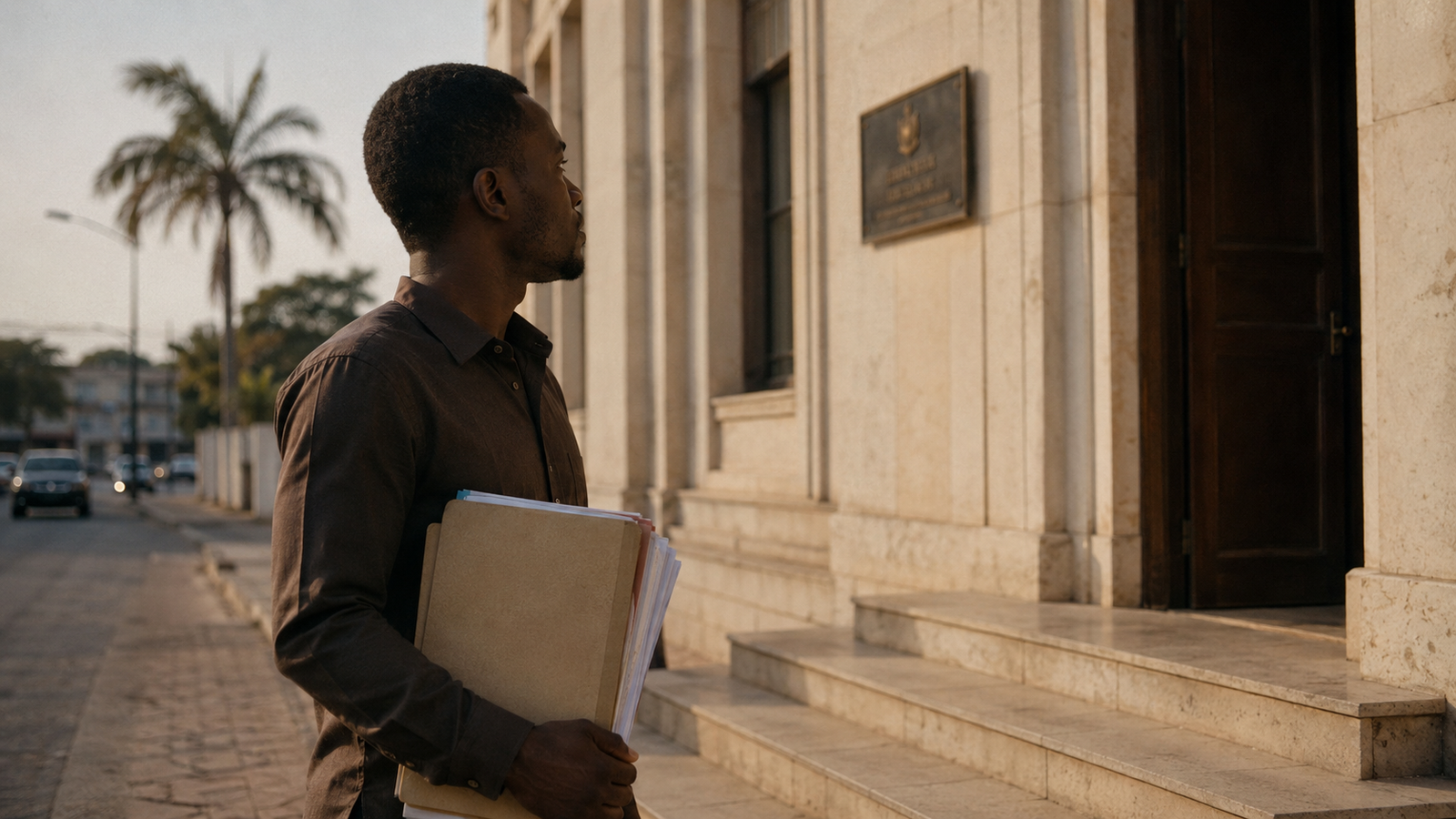
A Ghanaian man had been in Atlanta for eleven years. He had sent money home every month, the kind that paid school fees, patched roofs, and kept an uncle’s provision shop alive through the lean season. He had watched the Year of Return from a television in DeKalb County and felt something shift in his chest he could not name. He arrived in Accra in late January 2026, with a folder and a list. The folder had documents for two things he had been delaying since 2022: business registration with the Registrar General’s Department for a small trading business he was building in Tema, and a formal land titling application. Both queues had their own requirements. Both sets of requirements had been updated twice since he first downloaded them. He had printed them fresh that morning, which he would later learn was unnecessary.
On February 1, while his business registration sat at the Registrar General’s Department and his land title sat at the Lands Commission, the Ministry of the Interior suspended the Ghana diaspora citizenship programme and issued what it called a “strategic recalibration.” Strategic recalibration is the administrative equivalent of a Ghanaian telling you he is coming, but he is not coming immediately, he is now going to shower. The DNA evidence requirement and the $2,280 supplementary fee attached to the citizenship programme were under review. The Du Bois Centre in Accra, listed as the vetting venue, would resume processing shortly.
Ten days later, the programme resumed. The DNA requirement had been dropped. The fee had been eliminated.
Ghana designed the welcome. Then Ghana had to redesign the welcome in ten days. The new welcome looked exactly like the welcome but with the impossible parts removed.
The Programme That Could Not Survive Its Own Requirements
Ghana has been marketing belonging for years. The Year of Return in 2019 brought the diaspora back to the Cape Coast castles in record numbers. Beyond the Return extended the invitation through 2020 and beyond. By 2026, Ghana leads Africa’s entire cultural tourism industry, having overtaken Nigeria, Senegal, Ivory Coast, and Sierra Leone to become the continent’s premier heritage destination, according to travel industry analysis. Ghana welcomed 1.288 million international visitors in 2024 and earned a record $4.8 billion in tourism revenue.
There is a piece I wrote about how every borga eventually becomes the new Abusuapanin: the moment the Ghana diaspora member who left Ghana for greener pastures discovers, after a decade of sending money home, that they now hold authority over family decisions they cannot see from five thousand miles away. The citizenship programme is the institutional version of that transaction: Ghana reaching across the Atlantic to say, we see you as ours.
On February 1, 2026, the Ministry of the Interior suspended the programme. The official reason was “strategic recalibration.” The practical reasons were specific: the seven-day DNA deadline that labs quoted at three to six weeks, the $2,280 supplementary fee that appeared only after shortlisting, the kind that arrives after you have already packed, and documentation requirements that critics described, in polite terms, as impossible. The programme was suspended so it could be reviewed and made more transparent, affordable, and user-friendly.
Ten days later, Ghana resumed it. The DNA requirement was dropped. The fee was eliminated. The vetting continued at the Du Bois Centre.
The requirements that welcomed you home had never been necessary. They were there for ten days, then they were not.
The Wire Transfer Never Got Recalibrated
I want to be precise about the numbers because the numbers carry the argument.
An estimated 1.7 million Ghanaians live abroad across more than fifty countries. In 2025, their remittances reached $7.8 billion, as documented by the Bank of Ghana, representing roughly six percent of GDP and officially surpassing foreign direct investment in scale. These flows support over thirty percent of Ghanaian households and fund education, healthcare, housing, and small businesses across the country. This is borga money. It does not queue at the Registrar General Department. It does not wait at the Lands Commission for a site plan that was added for clarity. It leaves Atlanta on the first of the month and arrives in Accra before anyone has updated the checklist.
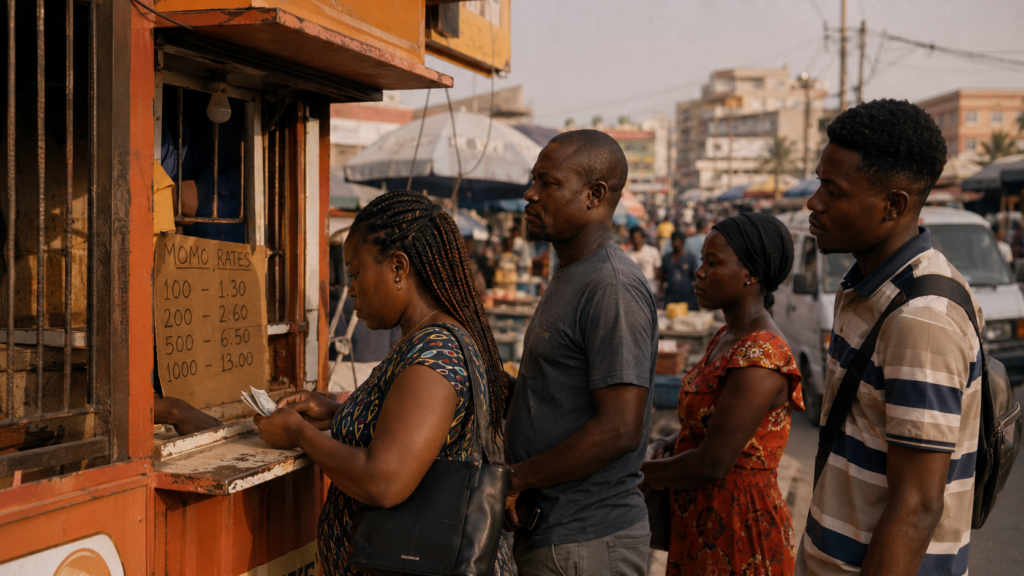
The Bank of Ghana has announced plans to redirect a portion of these remittances into bonds, SME financing, and national infrastructure. The borgas are being asked to invest more deliberately in a country they are already investing in, through a set of formal processes that have their own requirements, their own queues, and their own strategic recalibrations.
The citizenship programme belongs to a different group entirely. It is not designed for borgas, who are already Ghanaian citizens. It is designed for the historic diaspora: African Americans, Afro-Caribbeans, Black British, descendants of the transatlantic slave trade, people whose economic relationship with Ghana shows up in tourism revenue rather than remittance figures. Their queue is at the Du Bois Centre.
The $7.8 billion has never been placed under strategic recalibration. It has not been suspended while the government reviews whether it is sufficiently user-friendly. It arrives. Every month, it arrives, and the provision shop stays open, and the school fees are paid, and the rooms in Tema get built, and Ghana’s GDP figure in the remittances column goes up.
Also, the citizenship queue is still finding its architecture. The investor registration queue is at the GIPC. The land title queue is at the Lands Commission.
The Brewed Satire publishes every Tuesday and Friday. Subscribe below and the next piece arrives directly.
This lands in your inbox every Tuesday and Friday.
Subscribe free — no noise, just the satire
The Requirements Lasted Ten Days
The citizenship programme for the Historic Diaspora Community has been running since 2016. It is designed for people of African descent without Ghanaian parents, spouses, or other standard qualifying ties. These are the historic diaspora, descendants of the transatlantic slave trade, people for whom the paperwork trail to West Africa was severed generations ago. They cannot produce a grandfather’s birth certificate from Kumasi because the grandfather was born in a place that did not name him for documentation purposes.
This is what makes the DNA requirement interesting. On one hand, DNA is the only evidence that could reach across that kind of archival silence. On the other hand, requiring it within seven days from a diaspora applicant living in Atlanta, at a testing lab in Accra that quotes three to six weeks, is not a requirement. It is a geometry problem. The distance between Atlanta and Accra does not change to accommodate administrative deadlines. The hypotenuse was not consulted.
The pattern of systems designed without the actual user in mind is not unique to the citizenship programme. What is unusual here is the speed of the retraction. Ghana announced the impossible requirements on February 1. The Africa Report captured the immediate diaspora reaction: “The waiting hurts.” By February 11, the requirements were gone. That is either a remarkably agile government or requirements that should not have been there in the first place.
The Math of the Welcome
The programme has been running for ten years. In January 2025, Ghana granted 524 citizenship certificates in a single ceremony, the largest since the programme began. In March 2026, another 150 new citizens were welcomed at the Du Bois Centre. Together, those numbers bring total naturalisations to approximately one thousand people since 2016.
One thousand people. Ten years.
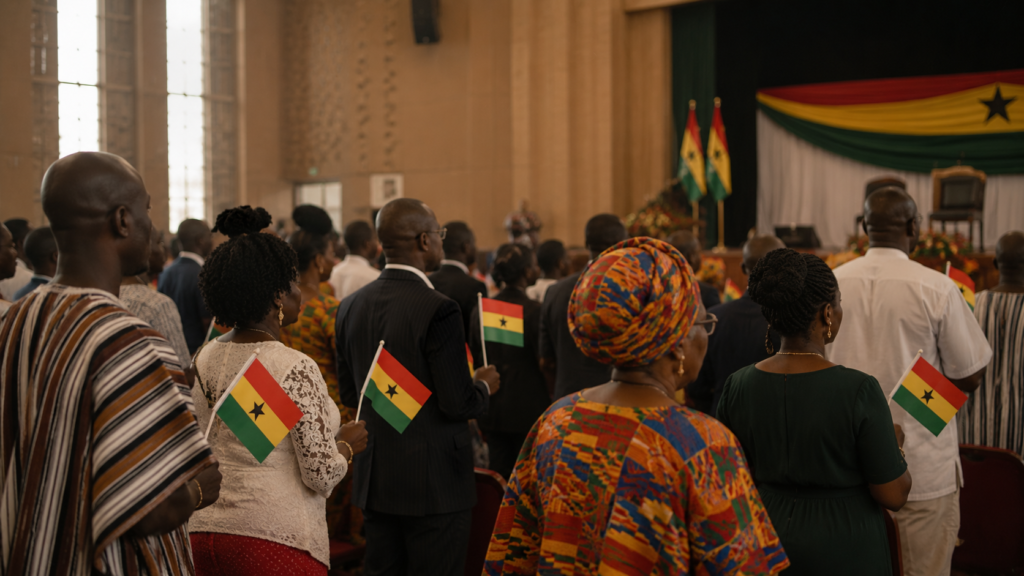
The January 2025 ceremony was celebrated as a record. It was a record. Five hundred and twenty-four people received their certificates in a single afternoon, in a hall, with small flags and photographs and speeches about belonging. If Ghana holds one record-breaking ceremony per year, and only a record-breaking one, the queue clears sometime around the year 3,400. The Beyond the Return campaign did not publish that projection.
Meanwhile, Ghana earned $4.8 billion from cultural tourism in 2024 alone. The World Cup in 2026 gave Ghana a platform to market itself to the world at exactly the moment the citizenship queue was under suspension review. The cost of living in Accra has climbed as the returnee population has grown, and local residents have noted the pressure on housing, utilities, and public infrastructure. The homeland being marketed to the world is also the homeland where people are already living, managing their own relationship with the welcome.
The programme processes roughly one hundred people a year. The cultural tourism campaign reaches millions. Both are described as parts of the same strategy.
W.E.B. Du Bois Did Not Have a Seven-Day Deadline
W.E.B. Du Bois arrived in Ghana in 1961 at ninety-three years old. The United States had cancelled his passport for political reasons. Kwame Nkrumah offered him Ghanaian citizenship. He accepted. He died in Accra in 1963 and is buried in the compound that now bears his name, the same compound where applicants for the current programme present their documents and wait.
There was no seven-day DNA deadline. There was no $2,280 fee. There was no suspension for strategic recalibration.
If Du Bois had applied through the current programme, he would have needed a birth certificate from Great Barrington, Massachusetts. He would have needed DNA evidence within seven days. He would have needed the supplementary fee that appeared only after shortlisting. He would have been required to attend vetting at the Du Bois Centre, the compound built in his memory, named for him, housing his grave, to confirm to the satisfaction of the committee that he was, in fact, the sort of person who belonged in Ghana.
The point is not that Ghana should return to 1961. The point is simpler: when a state decides citizenship is worth conferring quickly, the apparatus moves quickly. The apparatus for fast processing and slow processing is the same apparatus. The decision about which speed to use is not administrative. It is political.
The question of what belonging Ghana can actually extend to Ghanaians abroad runs through more than one piece on this site. The citizenship programme is one answer. Whether it is a complete answer is visible in the number: one hundred people per year, for ten years.
The Documents Still Locked Up At Institutions
Meanwhile, the Ghanaian man from Atlanta is still in Accra. His business registration is at the Registrar General’s Department, where it has been for six weeks. His land title application is at the Lands Commission, where it has also been for six weeks, though a different officer handles each file and neither office appears to have discussed this with the other. At both counters, he was told these things take time. At one counter, he was told to resubmit with an updated site plan. The updated site plan requirement had not been on the original checklist. It was added, he was informed, for clarity. The website had been updated to reflect it. He found the updated version three days after he had already resubmitted without it.
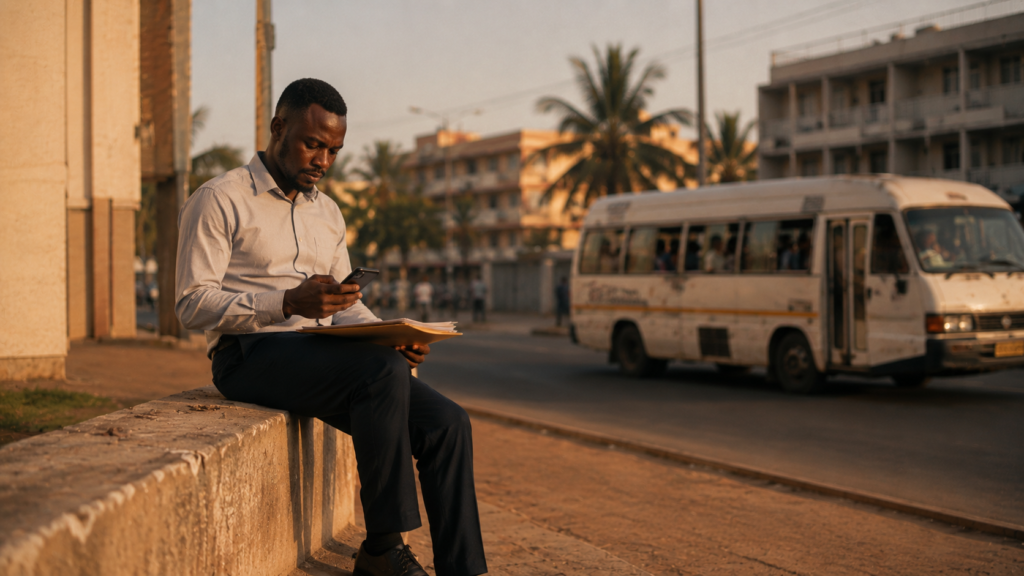
His sister lives in a flat in Labone that his remittances help cover. The monthly transfer is automatic, processed through the same fintech channel the Bank of Ghana now wants to redirect into infrastructure bonds. He has funded two rooms of a house in Tema where he has slept for a total of fourteen nights across eleven years. He calls Ghana home in every conversation.
He is ready to start his business, keep investing in Ghana, yet the systems are slothful and kills momentum if one is not patient enough. He then starts to fume, but fuming is the only thing he could do while being trapped in Ghana’s bureaucratic systems.
The Brewed Satire.
Disclaimer: Exaggerated for a satiric purposes.
Share via
Tags